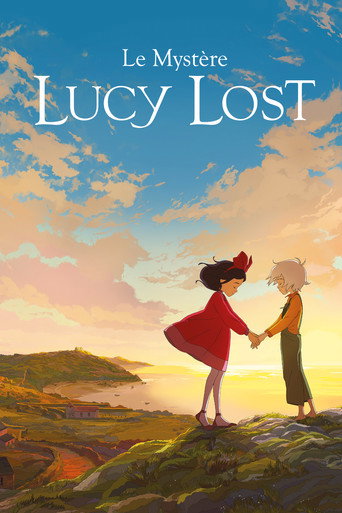
Люси потерялась (2026)
Le Mystère Lucy Lost
Люси, загадочная девушка, обладающая видениями, недоступными никому другому, встречает свою тайную подругу Милли. Вместе они отправляются в волшебное путешествие, чтобы раскрыть тайну ее таинственных способностей.
- Дата выхода
- 2026-10-28
- TMDB
- 8.0 / 10 (1)
- Длительность
- 1 ч 25 мин
- Жанры
- приключения, мультфильм, семейный, фэнтези, военный
- Режиссёр
- Olivier Clert
В ролях
- Charlie Rosenzweig — Lucy (voice)
- Zach Valentin-Dattas — Alfie (voice)
- Jessica Monceau — Mary (voice)
- Quentin Faure — Jim (voice)
- Keanu Peyran — Zeb (voice)
- Léonie Didier-Chiara — Elizabeth (voice)
- Haïly Yssembourg Da Cunha — Polly (voice)
- Rafael Didier-Chiara — Kenny (voice)
- Gustave Briere — Willy (voice)
- Benjamin Penemaria — Dave (voice)
- Николас Мари — Mr Beagley (voice)
- Leslie Lipkins — Miss Nightingale (voice)
Интересные факты
- Основан на: Listen to the Moon
Lucy Lost is a 2026 French animated mystery-historical film directed by Olivier Clert, co-written with Helen Blakeman, and adapted from 2014 children's novel Listen to the Moon by British author Michael Morpurgo. It is produced by Xilam Animation. Set during World War I, it follows the young girl Lucy, who is raised by a clan of fishermen on small remote island.
Production
Marc du Pontavice first read Listen to the Moon in 2017, when he was having a drink with an artist Xilam collaborated with, and he recommended it to du Pontavice and that he thought the "themes of family, love and memory against a backdrop of vivid landscapes, would translate beautifully to the screen".
Du Pontavice struggled due to its bifurcated structure, which was across two parallel narrative threads and that the crew had great difficulty adapting the story, which worked very well in the novel but was hard to translate to the screen. The original budget as a miniseries was $6 million.
The film was fully animated in a mix of traditional animation and 3D, with some parts of the animation were done at Gao Shan Pictures in Réunion in the Indian Ocean and cleanup and color were carried out at Xilam's studio in Vietnam. Olivier Clert personally created the storyboard for the entire film, single-handedly drawing and planning the staging for its 1,800 shots.
The film's team did not show the visuals to the book's author Michael Morpurgo until they had a completed animatic, which was a first animated version of the storyboard and they received a compliment from Morpurgo, who said he wished to have seen the film before he wrote the book.
The film's original score was composed by Anne-Sophie Versnaeyen; the first phase of recording took place at Studio Polyson in Montreuil. For the session, Jean-Michel Tavernier assembled a small 14-piece string section, conducted by Gisèle Gérard-Tolini, alongside a 6-piece woodwind group and an 8-piece brass section.
Читать в Википедии · Текст из Википедии, CC BY-SA 4.0. Данные Викиданных.
Рекомендуем
- Хильда и горный король 2021 · ★ 7.6
- Огрики 2021 · ★ 6.7
- Pachamama 2018 · ★ 7.2
- Страна снов 2022 · ★ 7.2
- Принцесса и гоблин 1991 · ★ 5.8
- Маугли дикой планеты 2019 · ★ 7.2
- Мальчик-дельфин 2022 · ★ 6.3
- Большое путешествие 2019 · ★ 6.8
- Бионикл 2: Легенда Метру Нуи 2004 · ★ 5.9
- Тайна зубных фей 2025 · ★ 8.5
- Знаменитое вторжение медведей на Сицилию 2019 · ★ 7.2
- Семья Уиллоби 2020 · ★ 7.1