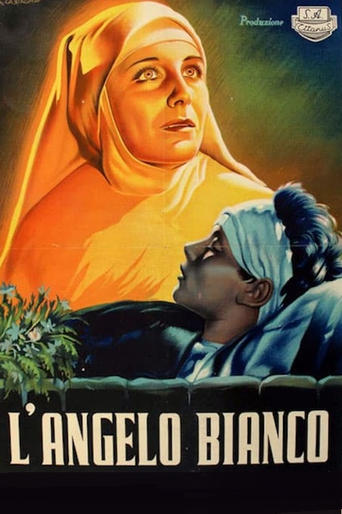
L'angelo bianco (1943)
A young woman who has been seduced and abandoned is led to believe by her former in-laws that their son, whom they sent to an orphanage, is dead. She takes her vows and returns to her homeland after years of missionary work. She learns that her former lover has been killed in a duel and barely has time to see her dying son before he passes away.
- Data de estreia
- 1943-01-01
- TMDB
- 8.0 / 10 (1)
- Géneros
- Drama
- Realizador
- Ettore Giannini, Giulio Antamoro, Federico Sinibaldi
Elenco
- Beatrice Mancini — Maria / Suor Francesca
- Filippo Scelzo — Giovanni Carani
- Emma Gramatica — Marchesa Anastasia Carani
- Cesare Barbetti — Il piccolo Cristino
- Giuseppe Addobbati — Il marchesino Arnaldo
- Elena Altieri — Contessina Clara, moglie di Arnaldo
- Adele Garavaglia — Zia Agata
- Gildo Bocci — Domenico, il mugnaio
- Marcello Giorda — Marini
- Emilio Petacci — Il conte, padre di Clara
- Gemma Bolognesi — La contessa, madre di Clara
- Angelo Dessy — Un maestro del collegio
Curiosidades
The White Angel is a 1943 Italian drama film directed by Giulio Antamoro, Federico Sinibaldi and Ettore Giannini and starring Emma Gramatica, Filippo Scelzo and Beatrice Mancini. It was shot at the Farnesina Studios of Titanus in Rome. The film's sets were designed by the art director Angelo Zagame. It was adapted from the novel I figli di nessuno by Ruggero Rindi, previously made into a 1921 silent film and later into a 1951 film of the same title.
Production and style
The White Angel was the final film directed by Giulio Antamoro, whose career began in the silent era with works such as The Adventures of Pinocchio (1911). After completing this production, he retired from filmmaking.
The film revisits themes from the 1921 drama I figli di nessuno, transforming its story of guilt and redemption into a more spiritual and moral allegory, in keeping with the cultural climate of early-1940s Italian cinema.
Production took place at the Titanus Farnesina Studios in Rome during the early months of 1943, shortly before wartime restrictions and bombing halted much of the city's film activity. Contemporary accounts describe the film as one of the last Titanus features completed before the end of the Fascist era.
Stylistically, the film combines conventional sound-era dialogue scenes with visual sequences reminiscent of silent cinema, employing dissolves, symbolic lighting, and extended long takes. Scholars have noted that Antamoro deliberately revived these techniques to express inner emotion visually rather than through dialogue.
Released in March 1943, The White Angel occupies a transitional place between the moral melodramas of the late Fascist period and the socially grounded neorealist cinema that followed the war. Critics have since regarded it as an early example of the religious melodrama genre that would resurface in post-war Italian popular cinema.
Ler na Wikipédia · Texto da Wikipédia, CC BY-SA 4.0. Dados do Wikidata.
Recomendados
- The Raffle 1991 · ★ 6.9
- Marcas do Passado 1998 · ★ 6.0
- Strange Weather 2016 · ★ 5.9
- O Que a Maisie Sabe 2013 · ★ 7.1
- Bella addormentata 2012 · ★ 6.3
- Most 2003 · ★ 7.3
- Come Sunday 2018 · ★ 5.8
- Uma Vida Nova 2004 · ★ 6.2
- A Rapariga do Livro 2015 · ★ 5.8
- Alex of Venice 2015 · ★ 5.9
- Sergio 2020 · ★ 6.5
- The Padre : Jogo Duplo 2018 · ★ 5.9