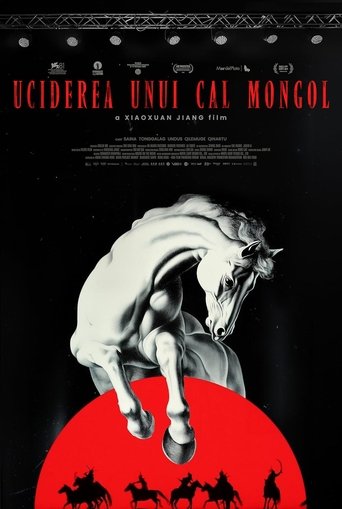
몽골말 죽이기 (2025)
一匹白馬的熱夢
한때 최고의 경마 기수였던 두 친구 사이나와 하싸는 생계를 위해 전통 기마 공연에 출연한다. 도시 이주를 결심하고 말과 양을 모두 팔아버린 하싸와 달리 사이나는 농장과 공연장을 오가며 아끼는 말들을 지켜내고 있지만, 지구온난화로 예년보다 늦게 도착한 올겨울은 유난히 혹독하다. 가뭄 끝의 혹한과 아버지의 도박 빚과 음주, 아내와 별거 중인 현실은 어느 하나 사이나의 편이 되어주지 않았다.
- 개봉일
- 2025-07-24
- TMDB
- 8.8 / 10 (5)
- 상영 시간(분)
- 1시간 37분
- 장르
- 드라마
- 감독
- Xiaoxuan Jiang
출연진
흥미로운 사실
To Kill a Mongolian Horse is a 2024 drama film directed and written by Jiang Xiaoxuan in her feature film debut. Set in Inner Mongolia and produced by Da Huang Pictures, the film is a co-production between Malaysia, Hong Kong, South Korea, Japan, and the United States. It stars Saina, a horseback performer and first-time actor, playing himself, and explores his struggle between adhering to traditions as a horseback performer and embracing contemporary society.
Production
Director Jiang Xiaoxuan grew up in Baotou, Inner Mongolia, where her father was a horse breeder. After graduating from the New York University Tisch School of the Arts, Jiang began working on her debut film, setting it against her upbringing and reflecting on the integral role of horses in Inner Mongolian culture.
The film was presented at the Asian Project Market in October 2023, where it won the VIPO Award and the Sørfond Award, as well as at the Hong Kong-Asia Film Financing Forum in March 2024. With a total budget of USD$320,000, Jiang explained that they did not deliberately join many project markets, attending only a few that were convenient in terms of timing, describing the funding they managed to secure as "a matter of luck".
Principal photography lasted about twenty days, with Tao Kio Qiu serving as the cinematographer, having previously collaborated with Jiang on her short film Graveyard of Horses (2022). Several crew members from Graveyard of Horses also reunited, including editor Zhong Zheng and the sound designer. Most of the shooting took place outdoors, utilizing drones.
The film features six horseback performance scenes intertwined with the dramatic narrative, with Jiang noting that these scenes serve both to demonstrate horsemanship skills and to advance the story. She views horseback performances as an art form that can resonate with audiences and aimed to convey subjective emotions, rather than presenting them objectively or anthropologically.
위키백과에서 더 읽기 · 텍스트 출처: 위키백과, CC BY-SA 4.0. 데이터 출처: Wikidata.
추천
- 히어 2024 · ★ 6.5
- 아이 빌리브 인 유니콘스 2015 · ★ 6.7
- 우견아랑 1989 · ★ 7.4
- 우정의 색 2000 · ★ 6.7
- Skin 2009 · ★ 6.4
- Home 2021 · ★ 6.7
- 내 사랑 플리카 2006 · ★ 6.9
- 패스트 걸스 2012 · ★ 6.0
- 더 챔프: 분노의 주먹 2007 · ★ 6.3
- TalhotBlond 2012 · ★ 6.3
- 침묵의 소리 2019 · ★ 5.9
- 메이지가 알고 있었던 일 2013 · ★ 7.1