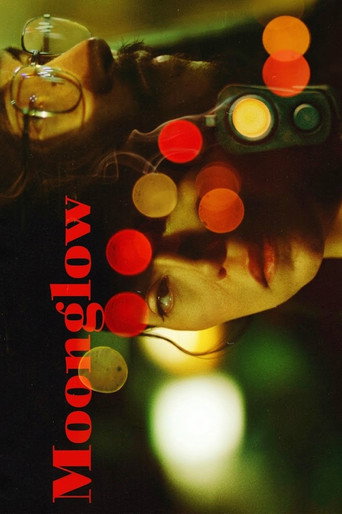
Moonglow (2026)
In 1970s Manila, a jaded police detective, who, unbeknownst to her colleagues, is the mastermind behind a successful heist, is paired up with her former lover, an obsessively truth-seeking detective, to crack the very crime that she orchestrated.
- Date of release
- 2026-02-04
- Runtime
- 1h 48m
- Genres
- Drama, Crime, Romance
- Director
- Isabel Sandoval
Casting
- Isabel Sandoval — Dahlia
- Arjo Atayde — Charlie
- Agot Isidro
- Carlos Siguion-Reyna
- Jhoanna San Juan — Nun
Interesting facts
Moonglow is a 2026 neo-noir romantic thriller film directed, written, and produced by Isabel Sandoval, who also stars in the lead role. Set in Manila in 1979 during Ferdinand Marcos's martial law, the film follows Dahlia (Sandoval), a police officer who commits a robbery and is then assigned to investigate her own crime alongside a former lover, Charlie. The film premiered in the Big Screen Competition at the 55th International Film Festival Rotterdam on February 4, 2026. It received mixed reviews from critics, who praised its atmospheric visuals but criticized its pacing and narrative tension.
Development
After completing her third feature Lingua Franca (2019), Sandoval directed episodes of the television series Under the Banner of Heaven, Tell Me Lies, and The Summer I Turned Pretty. She has described Moonglow as her "comeback film," marking her return to the Philippines to shoot a feature since Aparisyon (2012) and stating that she feels more artistically free to explore film as a medium in the Philippines than in the United States.
Sandoval has cited musical influences on the film, particularly the jazz soundtrack of Louis Malle's Elevator to the Gallows (1958) by Miles Davis. She listened to the song "Générique" on loop while writing the screenplay, stating that she "wanted to make a film that really embodied the mood and the atmosphere from that song." Other musical influences included Johnny Mathis's "Misty" and Nat King Cole's "The Very Thought of You."
Unlike her previous films, which were rooted in social realism, Sandoval approached Moonglow as a deliberate exercise in artifice, embracing the stylized conventions of 1940s and 1950s film noir and Hollywood melodrama. She has said that she is "only interested in genre tropes to subvert them, or to kind of flout them," and that she considers the film "a melodrama, perhaps a romantic melodrama specifically filtered through noir." She has also des…
Sandoval has noted that she is drawn to "women who have secrets or a double life and are dealing with some kind of personal or existential crisis in a clearly defined socio-political context." She sees her work as a kind of "Rorschach test" through which she projects unresolved personal dramas.
Read on Wikipedia · Text from Wikipedia, CC BY-SA 4.0. Data from Wikidata.
Recommended
- Killer Heat 2024 · ★ 5.8
- Inside Man 2023 · ★ 6.2
- The Parts You Lose 2019 · ★ 6.7
- Blue Story 2019 · ★ 7.3
- The Devil You Know 2022 · ★ 6.7
- The Locksmith 2023 · ★ 5.9
- The Public Eye 1992 · ★ 6.2
- The Enforcer 2022 · ★ 7.0
- In Secret 2014 · ★ 6.1
- The Double 2011 · ★ 5.8
- El padrino: The Latin Godfather 2004 · ★ 7.2
- Shimmer Lake 2017 · ★ 5.9