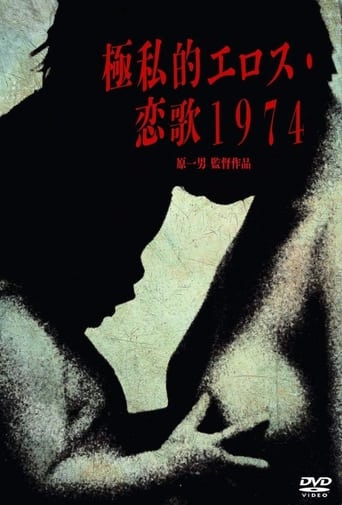
绝对隐私的性爱 恋歌1974 (1974)
極私的エロス 恋歌1974
在这部属于原一男极端个人的记录片开始,导演表明他拍这部片子就是要尝试解决他和前情人武田美由纪之间的感情问题,这个武田美由纪也是他们孩子的母亲,同时也是一个双性恋的女性主义者。这一表白暗示着原一男因为武田美由纪而感觉困扰,需要将之作为魔怪驱除。此外,导演和他目前的情人小林佐智子(现在为制片人)一起工作的这部电影,想要进一步展示的还有,描述了一个罕见的、毫不畏惧地迎面复杂生活的女人。影片没有从杂乱不堪的生活中躲开,相反是纵情其中。武田美由纪允许原一男和他的镜头以一种令人吃惊的通道进入她的生活,完全赤裸裸地剥开自己,一种赤裸也是一种象征。影片呈现出复杂而深长的意味,似乎影片很明显是关于片中的这个女人,但也是关于导演原一男自己,他明白自己的一部分和武田美由纪密切相关,可是她,并不关心原一男或观众会怎么看她,她似乎不感兴趣被描述为一个被怜悯者。她无数次对原一男和他的镜头直接表达她的愤怒,并因此走开,这种愤怒和生气是捉摸不定、反复无常的,也是一种美丽和非常生动的场面。这部电影如同小川绅介早期电影一样,是日本记录片发展进程中的一个里程碑。它们之间的区别是,小川的记录片是有关社会主题的集体电影制作,而原一男的这部电影则是代表了一种朝向个体的彻底转向。
演员阵容
趣闻
Extreme Private Eros: Love Song 1974 is a 1974 Japanese documentary film by director Kazuo Hara. The documentary centres on Hara's former partner, Miyuki Takeda, and follows her after she moves to Okinawa with their son, where she pursues relationships with a woman and later an American serviceman. The film documents Takeda's life as a single mother and feminist, as well as her pregnancy and eventual unassisted childbirth, while examining Hara's continuing relationship with her and his own position behind the camera.
Production
Extreme Private Eros: Love Song 1974 was Kazuo Hara's second feature-length documentary following Goodbye CP (1972). Produced by Sachiko Kobayashi through Shisso Productions, it was shot by Hara in black-and-white on 16mm, with sound by Yukio Kubota, editing by Jun Nabeshima and music by Tokiko Kato.
Following her separation from Hara, Takeda became involved with the Japanese Women's Liberation movement and moved to Okinawa. Hara later recalled that Takeda proposed that he make a film about her activities there. He expected the project to involve her criticising him and their former relationship from a feminist perspective, and saw this confrontation as the basis for a new kind of documentary.
Kobayashi was instrumental in organising and financing the production. Following screenings of Goodbye CP, she sought to use its independent exhibition network to raise money for a new film concerned with women's liberation. She also became a participant in the documentary when Hara brought her to meet Takeda in Okinawa.
Hara's personal involvement became increasingly visible during filming. He later described the camera as an extension of his body, connecting his practice to contemporary Japanese discussions of the “camera as violence”. At one point, while filming Takeda with another man, Hara became overwhelmed by jealousy and handed the camera to a friend, resulting in footage of Hara himself crying.
Takeda also influenced what Hara filmed. Most notably, after deciding to give birth without medical assistance, she asked him to record the delivery. Hara later said that he understood her request as a desire to see herself undergoing an experience that she could not observe directly.
在维基百科阅读更多 · 文本来自维基百科,CC BY-SA 4.0。数据来自 Wikidata。
推荐
- 我的妈妈,简 2025 · ★ 8.0
- 苍鹭与宫崎骏 2024 · ★ 7.8
- 麦昆 2018 · ★ 7.4
- 向光而行 2025 · ★ 7.1
- 有毒爱情故事 2026 · ★ 6.4
- 当我往前走之时偶尔会瞥到一缕美丽之景 2000 · ★ 7.8
- 阿凡达:深入潘多拉 2022 · ★ 7.2
- 你能看到一切 2026 · ★ 8.9
- 书缘:纽约公共图书馆 2017 · ★ 6.4
- S4基地:鲍勃·拉扎的故事 2026 · ★ 8.4
- 人生七年4 1985 · ★ 7.5
- 180°以南 2010 · ★ 7.2