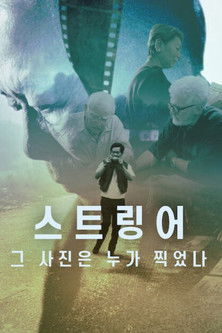
스트링어: 그 사진은 누가 찍었나 (2025)
The Stringer: The Man Who Took the Photo
공포에 질려 네이팜탄 공격을 피해 도망치는 소녀. 그 장면을 포착한 상징적인 베트남전 사진의 기원을 추적한 다큐멘터리. 베트남 전쟁의 참상을 보여주는 가장 상징적인 사진. 그 뒤에 숨겨진 진실은 무엇일까. 사이공에서 근무했던 전직 사진 편집가가 52년 만에 묻어뒀던 비밀을 털어놓는다. ‘통신원’이라고만 알려진 한 남자에 관한 비밀. 유명한 분쟁 지역 사진기자 게리 나이트와 몇몇 기자가 모여 집요한 조사와 탐문을 통해 정의를 되찾기 위한 2년간의 여정을 시작한다.
- 개봉일
- 2025-01-25
- TMDB
- 7.8 / 10 (22)
- 상영 시간(분)
- 1시간 40분
- 장르
- 다큐멘터리
- 감독
- Bao Nguyen
출연진
- Gary Knight — Self
흥미로운 사실
The Stringer: The Man Who Took the Photo is a 2025 documentary film directed by Bao Nguyen. Centered on the Vietnam War photograph The Terror of War, more commonly referred to as Napalm Girl, depicting Phan Thi Kim Phuc running from a napalm attack, the film examines whether it was credited to the right photographer. It presents a two-year investigation on the matter, arguing that a photo stringer named Nguyen Thanh Nghe actually took it rather than the officially credited photographer Nick Ut.
Background and allegations
The infamous photograph of Phuc, nine years old at the time, was taken on June 8, 1972, following a Republic of Vietnam Air Force napalm attack on the village of Trảng Bàng. Considered one of the most famous photographs of all time, it was and has remained attributed to Ut.
Nguyen's film investigates whether a stringer actually took the photograph, claiming that it was intentionally misattributed to Ut. Photographer and VII Photo Agency co-founder Gary Knight led the two-year investigation which culminated in The Stringer; he had heard rumors about the photograph's incorrect credit a decade prior "at a reunion of Vietnam veteran journalists." Specifically, Knight heard it from Carl Robinson, a photo editor in the AP…
For The Stringer, Knight and Robinson met in 2022, after which the film's argument began taking shape. Robinson claimed that he had "received film from Ut and two Vietnamese stringers, including one whose name he could not recall who wasn't a regular AP freelancer, and had labeled the negatives meticulously, per AP standards." The front-facing picture that would later become known as "Napalm Girl" was chosen by AP picture editor Horst Faas; accor…
Knight discovered possible evidence that the "Napalm Girl" photograph was actually taken by Nghe, who then sold it and other photographs to AP for $20. (At the time, Nghe was a driver for NBC and also a freelancer.) His brother-in-law, Tran Van Than, who was interviewed for the film, corroborated that he went to the AP office with Nghe that day.
Knight then went to the AP office in London to discuss the film and its findings. Knight wanted to see the press' archives, but AP wanted to see the film's research first. Knight then asked for an agreement where AP could not report on the film until it premiered, which it refused.
위키백과에서 더 읽기 · 텍스트 출처: 위키백과, CC BY-SA 4.0. 데이터 출처: Wikidata.
추천
- A Decade Under the Influence 2003 · ★ 7.9
- 커버업: 은폐된 진실 2025 · ★ 7.3
- 밤이 걷히면 2014 · ★ 7.6
- 관음증자의 모텔 2017 · ★ 5.9
- '빛 속의 나를 만나러 와요' - Come See Me in the Good Light 2025 · ★ 6.9
- 버마 VJ 2008 · ★ 7.3
- 시티즌포 2014 · ★ 7.7
- One Day in September 1999 · ★ 7.3
- 밀리어스 2013 · ★ 7.1
- 지독한 러브 스토리 2026 · ★ 6.5
- 리마스터드: 샘 쿡, 두 번 죽다 2019 · ★ 6.8
- 어나더 데이 오브 라이프 2018 · ★ 7.4