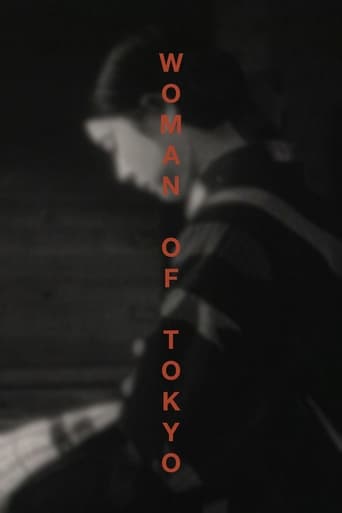
Woman of Tokyo (1933)
東京の女
Ryoichi and Chikako, brother and sister, live together. Chikako toils during the day and, at night, prostitutes herself to fund his college tuition.
- Date of release
- 1933-02-09
- TMDB
- 6.8 / 10 (36)
- Runtime
- 47m
- Genres
- Drama
- Director
- Yasujirō Ozu
Casting
- Yoshiko Okada — Chikako
- Ureo Egawa — Ryoichi
- Kinuyo Tanaka — Harue
- Shin'yō Nara — Kinoshita
- Chishū Ryū — Reporter
Interesting facts
Woman of Tokyo is a 1933 Japanese film directed by Yasujirō Ozu. The film's working title was Her Case, For Example
Production
Woman of Tokyo was shot in nine days or fewer, during a gap in Shochiku's production schedule. Ozu had a week or so free before he was due to begin production on his next feature, Dragnet Girl, and was drafted in to direct. The credits indicate that the screenplay, by regular Ozu collaborators Kogo Noda and Tadao Ikeda, was based on the novel "Twenty-Six Hours" by Ernest Schwartz; neither Schwartz nor the novel ever existed.
The script originally suggested that Chikako was contributing her illicit earnings to the Communist Party, but these political elements were excised before shooting began. The reasons for this are unknown, although Ozu scholar Tony Rayns has suggested either Ozu or the studio were responsible, possibly to avoid the attentions of the censor.
When Ryoichi and Harue visit the cinema, they watch the film If I Had a Million. Ozu includes material from the Ernst Lubitsch section of this anthology picture, in which Charles Laughton, an office worker, barges into his boss's office. Ozu cuts away before the climax of the scene, when Laughton stands before his boss and blows a raspberry.
Read on Wikipedia · Text from Wikipedia, CC BY-SA 4.0. Data from Wikidata.
Recommended
- Like Someone in Love 2012 · ★ 6.9
- Trafficked 2017 · ★ 6.6
- Sakuran 2006 · ★ 6.5
- Tokyo Decadence 1992 · ★ 6.0
- Pimp 2018 · ★ 6.2
- Secret Ceremony 1968 · ★ 6.0
- Call Boy 2018 · ★ 6.5
- The Insect Woman 1963 · ★ 7.2
- The Woman in the Rumor 1954 · ★ 7.3
- Òlòtūré 2019 · ★ 6.3
- Call Me Chihiro 2023 · ★ 7.2
- L.I.E. 2001 · ★ 6.8