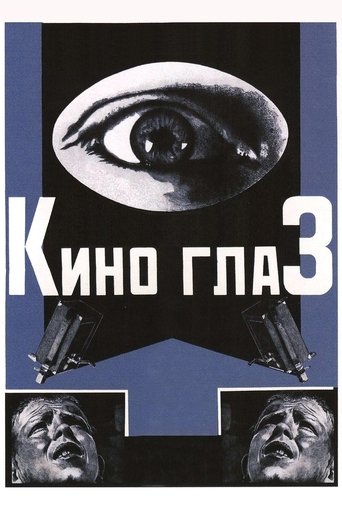
电影眼睛 (1924)
Киноглаз
这部旨在展现苏联乡村生活之乐的纪录片,聚焦于少年先锋队的日常活动。镜头里的孩子们总是忙碌不停——他们在墙上张贴宣传海报,分发传单,劝导人们"从合作社购买商品"而非选择公共部门,推广节制饮酒的理念,并帮助贫困的寡妇。影片中实验性的倒放镜头尤为特别:被宰杀的公牛奇迹般"复活",烤好的面包竟"退回"成面团。
趣闻
Kino-Eye is a 1924 Soviet silent documentary film directed by Dziga Vertov and shot by cinematographer Mikhail Kaufman. This experimental film, which laid the groundwork for Vertov's principles of documentary filmmaking, received mixed reviews from critics and film scholars.
Production
While preparing the proposal for Kino-Eye, Dziga Vertov wrote that it would be the world's first film shot without actors, costume designers, set designers, or makeup artists; as a director, he would not need studio soundstages or sets, because the film's characters would exist in real life.
In 1923, four members of the film crew arrived in the village of Pavlovskoye. The filmmakers were drawn to this area not only because of the picturesque landscapes of the Istra, but also because one of the first Young Pioneer camps in the USSR was located on the riverbank.
Vertov's crew stayed in Pavlovskoye and traveled to the pioneer camp every morning. The filmmakers urged children and adults alike not to pay any attention to them; the filming took place in a natural setting, without any staged scenes. The film, widely regarded as experimental and shot in accordance with Dziga Vertov's theory of "life caught unawares", was released in 1924.
在维基百科阅读更多 · 文本来自维基百科,CC BY-SA 4.0。数据来自 Wikidata。