平静的速度 (1970)
Serene Velocity
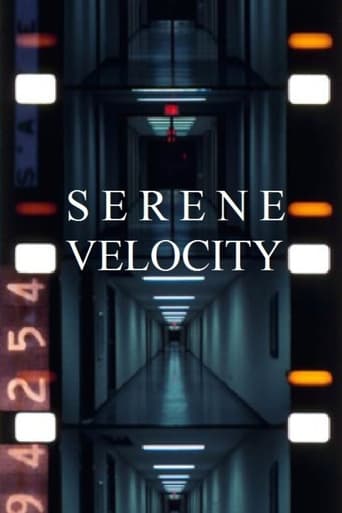
美国艺术家厄尼·格尔(Ernie Gehr)自1967年起制作了24部16毫米实验电影,在《平静的速度》(Serene Velocity,1970年)一片中,他将摄影机对焦在一幢官方建筑的一条走廊,将伸缩镜头的焦距范围分成两部分,摄影机不动,头4格以50mm焦距拍,下4 格用55mm拍,来回反复60英尺,再换成45mm与60mm如法炮制60英尺,再然后40mm与65mm…使影像透视关系有节奏地改变,先是大小体积稍微变化,最后达到极广角与极望远镜头之间的张力。
- 上映日期
- 1970-10-07
- TMDB
- 4.5 / 10 (22)
- 片长(分钟)
- 23分钟
- 导演
- 厄尼·格尔
趣闻
Serene Velocity is a 1970 American experimental short film directed by Ernie Gehr. Gehr filmed it in the basement hallway of a Binghamton University academic building, using a static camera position and changing only the focal length of the camera. It is recognized as a key work of structural filmmaking and was selected for preservation in the U.S. National Film Registry in 2001.
Production
In early 1970 Gehr was at SUNY Binghamton while Larry Gottheim was beginning to form a film department. Gottheim was impressed with Gehr's earlier short films Morning and Wait, and the two became acquainted when Gottheim replaced a damaged print of one of Gehr's works. With the encouragement of Gottheim and Ken Jacobs, Gehr taught two courses there during the summer session.
Gehr began shooting test footage in the basement hallway. He tested mid-range and extreme focal lengths in "bars" of 1, 2, 4, 6, and 8 frames. He decided to use bars of 4 frames, projected at 16 frames per second. This would have been roughly equivalent to 6 frames at 24 frames per second, but Gehr chose a lower frame rate so that each frame would remain on screen longer, accentuating the optical effects.
The footage for Serene Velocity was shot over the course of one night. Gehr began filming once it was dark outside, planning to take a break for several hours and finish filming during sunrise. He started by alternating between focal lengths of 50 mm and 55 mm. After roughly 60 feet (18 m) of film, he moved each of the lengths apart by 5 mm, to 45 mm and 60 mm, then 40 mm and 65 mm, and so on.
在维基百科阅读更多 · 文本来自维基百科,CC BY-SA 4.0。数据来自 Wikidata。
推荐
- Very Nice, Very Nice 1961 · ★ 6.0
- Reservoir Dogs 1991 · ★ 7.4
- Electronic Labyrinth: THX 1138 4EB 1967 · ★ 6.0
- 化身博士 1912 · ★ 5.9
- 小麦的囤积 1909 · ★ 6.2
- 板牙与鬼火 2006 · ★ 6.3
- 命运 2003 · ★ 7.2
- 我妻子的亲戚 1922 · ★ 6.2
- 拥抱小熊猫:青春变形记背后的故事 2022 · ★ 6.8
- 曲面 2016 · ★ 6.8
- 时间之旅:IMAX神奇体验 2016 · ★ 6.9
- 我和我的伙伴 1933 · ★ 6.5