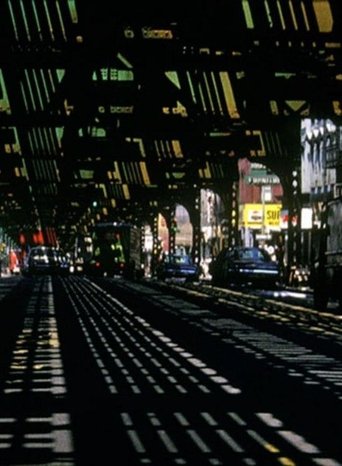
Hours for Jerome (1982)
The recording of the daily events of Dorsky and his partner, artist Jerome Hiler, around Lake Owassa in New Jersey and in Manhattan. The two parts of the films revolve around the four seasons with the first part revolving around spring through summer, while the second part revolves around fall through winter.
- Fecha de estreno
- 1982-12-05
- TMDB
- 7.8 / 10 (4)
- Duración
- 1 h 1 min
- Géneros
- Documental
- Director
- Nathaniel Dorsky
Reparto
Curiosidades
- Premios: 1 · Nominaciones: 0. Incluyendo: National Film Registry
Hours for Jerome is a 1982 American silent experimental film in two parts by Nathaniel Dorsky. It captures daily events from Dorsky's life with his partner, artist Jerome Hiler, around Lake Owassa in New Jersey and in Manhattan. These are presented in 66 sequences of disparate images, separated from each other by black leader. The film is structured around the four seasons, with Part 1 showing spring and summer while Part 2 revolves around fall and winter.
Production
Prior to shooting Hours for Jerome, Dorsky had made Ingreen, A Fall Trip Home, and Summerwind, a trilogy dealing with adolescence and small-town life, during the mid-1960s. He continued recording footage after Summerwind, and the earliest images used in Hours for Jerome were captured in 1966, showing the same forest from his previous film in winter.
Dorsky filmed with a Bolex 16 mm camera, equipped with an Angénieux telephoto lens. He shot on various reversal film stocks, primarily Kodachrome II. Kodachrome was known for creating intense, saturated color, and Dorsky managed to increase the contrast through underexposure. He also revised the color by intentionally distorting the balance during the color timing process.
Dorsky began editing the footage, producing the more conspicuous jump cuts and rapid intercutting seen in Hours for Jerome. However, an overall design for a film did not emerge during this period. As a result, he finished shooting in 1970 and the material was shown only to friends, in private home screenings. The following year, Dorsky moved with Hiler to San Francisco.
In 1978, poet Larry Fagin, whom Dorsky had known in New York, visited him in San Francisco. Fagin had not seen the footage before, so Dorsky retrieved and projected it. He was inspired to construct a film out of the material, which he found "quite haunting…because it seemed that it came from the simplicity of my heart, from a simple attempt to show very sincere things". He spent 1980 to 1982 editing the footage.
Dorsky's decision to introduce black leader between each stanza came as a way to "open up space" within the film, similar to a pause in a musical composition. This technique was adopted from a 1966 untitled film by Hiler, later released as Fool's Spring. He closely observed the afterimage that lingered after a stanza and considered how its colors would carry over into the following segment.
Leer en Wikipedia · Texto de Wikipedia, CC BY-SA 4.0. Datos de Wikidata.
Recomendadas
- Mi mama Jayne: una película de Mariska Hargitay 2025 · ★ 8.0
- Come See Me in the Good Light 2025 · ★ 7.1
- Naqoyqatsi 2002 · ★ 6.2
- Una tóxica historia de amor 2026 · ★ 6.4
- Especial Avatar: Inmersión total 2022 · ★ 7.2
- 28 Up 1985 · ★ 7.5
- En el camino, de cuando en cuando, vislumbré breves momentos de belleza 2000 · ★ 7.8
- The Show Must Go On: The Queen + Adam Lambert Story 2019 · ★ 7.3
- Seducidos y abandonados 2013 · ★ 6.2
- Chadwick Boseman: A Tribute for a King 2020 · ★ 8.1
- Drew: The Man Behind the Poster 2013 · ★ 7.0
- The Class of ‘92 2013 · ★ 7.1