符咒 (1980)
Nijinsky
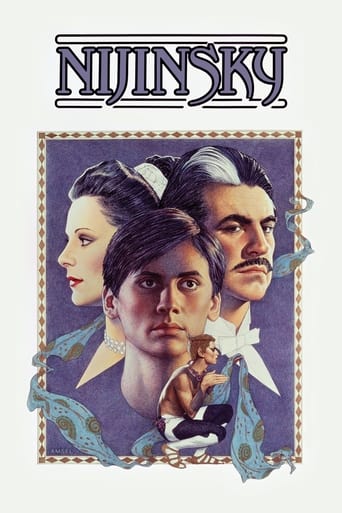
这部电影暗示尼金斯基被他那强烈的野心和自我强加的异性恋性取向推向了疯狂,后者是由他与罗莫拉·德·普尔斯基的浪漫关系引发的。罗莫拉是一个社交名媛,特意加入谢尔盖·戴亚基列夫的俄罗斯芭蕾舞团来引诱尼金斯基。在与戴亚基列夫的一系列误解后,戴亚基列夫既是他的强势导师又是占有欲强的恋人,尼金斯基屈服于罗莫拉的魅力并与她结婚,随后他从艺术情绪不稳定逐渐陷入完全的疯狂。
- 上映日期
- 1980-03-20
- TMDB
- 4.9 / 10 (20)
- 片长(分钟)
- 2小时9分钟
- 类型
- 剧情, 音乐, 爱情
- 导演
- Herbert Ross
演员阵容
- 阿兰·贝茨 — Sergei Diaghilev
- George De La Pena — Vaslav Nijinsky
- Leslie Browne — Romola de Pulsky
- Carla Fracci — Tamara Karsavina
- 罗纳德·皮卡普 — Igor Stravinsky
- 罗纳德·莱西 — Leon Bakst
- 杰瑞米·艾恩斯 — Mikhail Fokine
- 弗农·多布切夫 — Sergei Grigoriev
- Janet Suzman — Emilia Marcus
- Colin Blakely — Vassili
- Siân Phillips — Lady Ripon
- Frederick Jaeger — Gabriel Astruc
趣闻
- 拍摄地:鬆木製片廠
Nijinsky is a 1980 American biographical film directed by Herbert Ross. Hugh Wheeler wrote a screenplay that explores the later life and career of Vaslav Nijinsky; it was based largely on the premier danseur's personal diaries, and her 1934 biography of Nijinsky, largely ghostwritten by Lincoln Kirstein, who later co-founded the New York City Ballet.
Production notes
Harry Saltzman purchased the rights in 1969 from film director Charles Vidor's widow. Saltzman had originally promised to let Ken Russell direct the film, but due to a falling out, Saltzman hired Tony Richardson to direct. The film was canceled during pre-production. After the success of Herbert Ross's ballet film The Turning Point, Saltzman approached Ross to direct; Ross was initially unenthusiastic.
This was Herbert Ross' second film to focus on the world of ballet. In his 1977 film he had worked with Mikhail Baryshnikov and other members of the American Ballet Theatre. Baryshnikov turned down the role of Vaslav Nijinsky as the American Ballet Theatre had promoted him to the role of artistic director.
Nijinsky was the film debut of Jeremy Irons. It was the second to last film produced by Harry Saltzman.
The Los Angeles Philharmonic Orchestra and the London Festival Ballet were featured in the dance sequences. David Hersey of the National Film Theatre in London designed the theatrical lighting in these scenes.
在维基百科阅读更多 · 文本来自维基百科,CC BY-SA 4.0。数据来自 Wikidata。