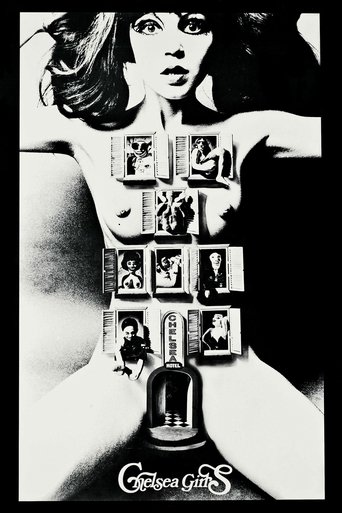
雀西女郎 (1966)
Chelsea Girls
60年代最惊世骇俗的「地下」电影,带领观众窥视安迪 沃霍尔(Andy Warhol)以及环绕在他周围的「艺文巨星」的生活面向,影片的部分场景在纽约声名狼藉的雀西旅馆拍摄,在这个作家、诗人、艺术家和文艺青年最喜欢斯混的地方,沃荷记录了那一个世代青年的药物、死亡、性欲、同志、变装癖等等边缘议题,有毫无边界的放浪追求及几乎无法承受的孤寂苦闷,沃荷的音乐伙伴「非法利益(Velvet Underground)」乐团担任配乐,歌手妮可Nico也在片中演出。
演员阵容
- Nico — Self
- Christian Aaron Boulogne — Self
- Susan Bottomly — Self
- Mary Woronov — Hanoi Hannah
- Brigid Berlin — Self - The Duchess
- Eric Emerson — Self
- Gerard Malanga — Son
- 保罗·莫里西 — self
- Buffy Phelps — self
- Ondine — Self - Pope
- Billy Name — self
- Rene Ricard — self
趣闻
Chelsea Girls is a 1966 American experimental underground film directed by Andy Warhol and Paul Morrissey. Noted for its split-screen presentation and alternating use of color and black-and-white footage, the film features a series of loosely connected vignettes centered on Warhol's "superstars", many of whom were filmed inside New York's Chelsea Hotel. Upon its release, Chelsea Girls became Warhol's first commercial success and is regarded as a landmark of underground cinema for its unconventional structure, improvisational performances, and voyeuristic style. The original cut runs at just over three hours long.
Production
According to scriptwriter Ronald Tavel, Warhol first brought up the idea for the film in the back room of Max's Kansas City, Warhol's favorite nightspot, in 1966. Warhol superstars Nico, Edie Sedgwick, and International Velvet were all living in the Chelsea area. Warhol, newly returned from touring with the Velvet Underground, decided to make a film set there and titled it Chelsea Girls.
The film was shot in the summer and early autumn of 1966, in various rooms and locations inside the Hotel Chelsea. Filming also took place at Warhol's studio, The Factory. Appearing in the film were many of Warhol's regulars, including Nico, Brigid Berlin, Gerard Malanga, Mary Woronov (as Hanoi Hannah), Ingrid Superstar, "International Velvet" and Eric Emerson.
Once principal photography wrapped, Warhol and co-director Paul Morrissey selected the 12 most striking vignettes they had filmed, and then projected them, side-by-side, to create a visual juxtaposition, of both contrasting images and divergent content (the so-called "white" or light, and innocent aspects of life, against the "black" or darker, more disturbing aspects).
Several of the sequences have gone on to attain a cult status, most notably the "Pope" sequence, featuring avant-garde actor and poet Robert Olivo, or Ondine as he called himself, as well as a segment featuring Mary Woronov titled "Hanoi Hannah", one of two portions of the film scripted specifically by Tavel.
Notably missing is a sequence Warhol shot with Edie Sedgwick which, according to Morrissey, Warhol excised from the final film at the insistence of Sedgwick, who claimed she was under contract to Bob Dylan's manager Albert Grossman at the time the film was made. Sedgwick's footage was used in the Warhol film Afternoon.
在维基百科阅读更多 · 文本来自维基百科,CC BY-SA 4.0。数据来自 Wikidata。