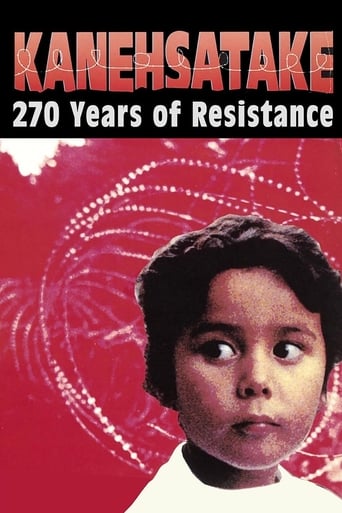
Kanehsatake, 270 Years of Resistance (1993)
In July 1990, a dispute over a proposed golf course to be built on Kanien’kéhaka (Mohawk) lands in Oka, Quebec, sets the stage for a historic confrontation that would grab international headlines and sear itself into the Canadian consciousness.
- Date of release
- 1993-07-12
- TMDB
- 7.5 / 10 (17)
- Runtime
- 1h 59m
- Genres
- Documentary
- Director
- Alanis Obomsawin
- Collection
- Oka series
Casting
- Alanis Obomsawin — Narrator (voice)
- Jack Burning — Chief Joseph (voice)
- Herbie Barnes — Chief Augnita
- Ethel Blondin — Self
- Robert Bourassa — Self
- John Ciaccia — Self
- Ellen Gabriel — Self
- Elijah Harper — Self
- Ovide Mercredi — Self
- Frank Natawe — Self
- Bill Traverse — Self
Interesting facts
- Awards: 1 · Nominations: 0. Including: Toronto International Film Festival Award for Best Canadian Film
Kanehsatake: 270 Years of Resistance is a 1993 feature-length documentary film by Alanis Obomsawin, highlighting the events of the 1990 Oka Crisis. Obomsawin documents the events of The Siege of Kanehsatake over 78 days, capturing a rare perspective of an important turning point in Canadian history. Produced by the National Film Board of Canada, the film won 18 Canadian and international awards, including the Distinguished Documentary Achievement Award from the International Documentary Association and the CITY TV Award for Best Canadian Feature Film from the Toronto Festival of Festivals.
Production
In a video interview for the 'NFB Pause series' celebrating the 25th anniversary of the film, Alanis Obomsawin recounts,“I was working on another film, I was driving my car I was on my way to the film board, and I hear on CBC news: a shoot out in Kanehsatake. You could hear the sound of the guns, so I went straight there instead of going to the film board.
It took several days before Alanis was able to cross the barricade to be with the Mohawk community and the Warriors. Not knowing how the conflict would develop, Obomsawin captured the rest of the siege. The Siege of Kanehsatake was the largest amount of troops deployed in an Indigenous rights issue.
The production conditions that Obomsawin and her film crew were subjected to were less than favourable. The filmmaker herself admitted to feeling afraid for her life. Obomsawin and the Mohawk community faced many sleepless nights as well as fleeing from attacks from the army. After a cameraman left the scene in fear of his safety, Obomsawin took charge and adjusted to using the equipment herself.
The film's subjective style is contrary to early Indigenous documentary works where they were the subjects being observed and preserved with a Western ethnographic gaze. “Obomsawin’s subjective style is what makes her films so important simply because they are about her, and her people, supplying her own images and commentary”. Alanis Obomsawin is the narrator in Kanehsatake: 270 Years of Resistance.
Read on Wikipedia · Text from Wikipedia, CC BY-SA 4.0. Data from Wikidata.
Recommended
- Reel Injun 2010 · ★ 7.0
- Sidney 2022 · ★ 6.9
- Stories We Tell 2012 · ★ 7.1
- Seduced and Abandoned 2013 · ★ 6.2
- Harry Dean Stanton: Partly Fiction 2013 · ★ 6.9
- 1 2013 · ★ 6.6
- Capital in the Twenty-First Century 2019 · ★ 6.5
- The Class of ‘92 2013 · ★ 7.1
- Hell and Back Again 2011 · ★ 6.3
- The Show Must Go On: The Queen + Adam Lambert Story 2019 · ★ 7.3
- The U.S. vs. John Lennon 2006 · ★ 6.6
- Deliver Us from Evil 2006 · ★ 7.2