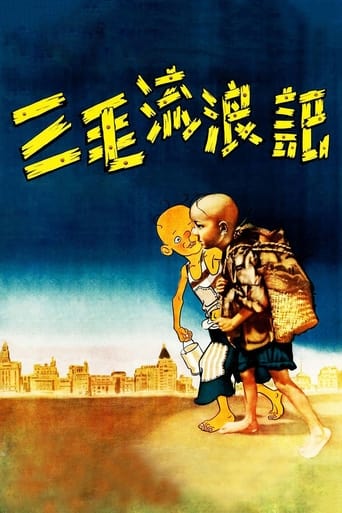
三毛流浪记 (1949)
解放前的旧上海,大资本家、军阀、投机商人、洋人、流氓、骗子横行于世,他们过着养尊处优、挥金如土的腐败日子,而底层人民则穷苦不堪,生活艰辛。大头、圆鼻子、三根头发、瘦小身材,这个外貌滑稽的男孩就是本片的主人公三毛。三毛自幼失去父母,无依无靠的他终日在上海街头流浪,身无分文的他饿极了甚至吃刷广告的浆糊,困了就睡在垃圾车里。为了生存他送报纸、推黄包车、捡烟头,然而霉运却总尾随其后,所有的事都以失败告终。他好心做善事,反遭到诬陷和殴打。不过,生活在黑暗底层的三毛始终保持着诚实善良的性格,他从不愿为一口饭而沦为他人做恶的工具。
演员阵容
趣闻
The Adventures of Sanmao the Waif is a 1949 Chinese film produced by Kunlun Film Company, directed by Zhao Ming and Yan Gong, and written by Yang Hansheng, Chen Baichen, and Li Tianji. The 1949 film is based on the Sanmao comic, created by Zhang Leping in 1935, which features the well-known Chinese cultural symbol of child poverty, Sanmao, a homeless orphan boy. The film, which stars Wang Longji, follows Sanmao through his adventures surviving and meeting new people on the streets of Shanghai. The film notably works to counterbalance the tragic story of Sanmao with humor and comedy.
Production and political pressure
The film was produced and developed by Kunlun Film Company, a Shanghai company founded in May 1947 and established as a replacement for Lianhua Film Company which previously shut down due to extensive interference of the National Party.
With development beginning in October 1948, the film's release was originally planned for release in the same year, but it was banned by the Kuomintang. In the initial stages of the film's production, Zhao Ming received an anonymous threatening letter, presumably from Kuomintang, which read, “If Sanmao carries on, you will have to watch your head.” Zhang Leping, who actively participated in the film's production received the same message a few da…
Since 1949, because of the political and revolutionary backgrounds in contemporary China, almost all the films had been produced among six major motifs:
1) praise and loyalty to Mao and the CCP,
3) comparison between the new and old society,
在维基百科阅读更多 · 文本来自维基百科,CC BY-SA 4.0。数据来自 Wikidata。