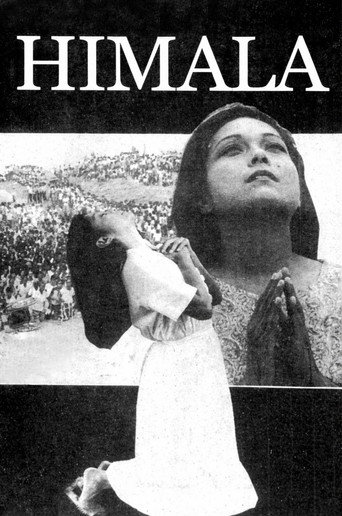
神迹 (1982)
Himala
荒凉小镇久旱成灾,天狗食日之际,爱莎据称亲历圣母显灵,获赐予治病能力。朝圣者与好奇客闻风涌至,居民趁机大刮油水,出售圣物圣水、出租被铺甚至床上服务一应俱全。导演赶来凑热闹拍摄奇人异事纪录片,爆出爱莎因奸而怀胎,居民深信是圣灵感孕。此时雷电交加天降甘霖,爱莎突然道出真相,令全镇陷入疯狂。改编真人真事,贝卢将「奇迹」提升至隐喻菲律宾集体意识的神话,微观人对宗教权威的迷信已至失去理智的境地:人在自创神话,也是在自掘坟墓。被誉为贝卢巅峰作,其高瞻远瞩令人折服,CNN 选为有史以来亚太区最佳电影之一。
- 上映日期
- 1982-12-25
- TMDB
- 8.0 / 10 (22)
- 片长(分钟)
- 2小时4分钟
- 类型
- 剧情
- 导演
- Ishmael Bernal
演员阵容
- Nora Aunor — Elsa
- Spanky Manikan — Orly
- Vangie Labalan — Saling
- Gigi Dueñas — Nimia
- Laura Centeno — Chayong
- Pen Medina — Pilo
- Ama Quiambao — Sepa
- Joel Lamangan — Priest
- Cris Daluz — Igme
- Veronica Palileo — Mrs. Alba
- Ray Ventura — Bino
- Ben Almeda — Baldo
趣闻
Himala ('Miracle') is a 1982 Philippine religious drama film directed by Ishmael Bernal and produced by the Experimental Cinema of the Philippines. It stars Nora Aunor as a young woman living in the province who claims to have seen a Marian apparition. The film story and script written by Ricky Lee was inspired by a series of alleged Marian apparitions experienced by schoolgirls from 1966 to 1972 on Cabra Island in Lubang, Occidental Mindoro.
Production
Ricky Lee began to write the script for Himala in 1976 under director, Mike de Leon. Ricky Lee (although requested to be uncredited), Gil Quito and Doy del Mundo together co-written Itim. Quito told Lee, about a female faith healer he and a friend visited in Malolos, Bulacan. The faith healer was cured of cancer by another faith healer, leading her to be a faith healer herself.
With the help of Bibsy Carballo, Lee approached several producers to promote the script but was rejected several times. He entered the script to a contest by the Experimental Cinema of the Philippines where it became one of the selected scripts for production. Lee was given a month to come up with the final draft and was given ₱40,000. Several aspects of the script were revised. One of the unchanged parts is the casting of Nora Aunor as Elsa.
Lee came up with different endings for the script of Himala. In one version, Elsa did not die; the townsfolk gradually stopped flocking to her and she reverted to being an ordinary person. Many years later, Orly chances upon Elsa drawing water from an old well, having fallen into obscurity along with her "miracle." In another ending, Elsa was resurrected like Jesus Christ.
Shooting began on July 13, 1982, with the arrival of the art department in Paoay, Ilocos Norte led by production designer, Raquel Villavicencio. The production team needed a location for the main setting of the film: a barren and arid land where plants hardly grow and where the soil cracks, suggesting that a slight rain would be considered a miracle by inhabitants.
Barangay Calayab in Laoag was used to depict the village of Cupang, with ten carpenters working 24/7 on the set. Around 3,000 extras were employed for the film. Director Ishmael Bernal also asked people actually inflicted by various conditions and diseases to portray the infirm within the film.
在维基百科阅读更多 · 文本来自维基百科,CC BY-SA 4.0。数据来自 Wikidata。