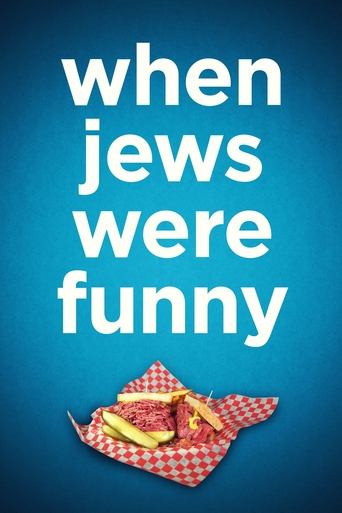
When Jews Were Funny (2013)
From the 1930's to the 1970's, pretty well every comedian or comic you might see on TV or the movies was Jewish. Jews came to dominate the world of western‐society comedy on radio, stage and screen alike.Why did Jews dominate comedy in this period? And why did that domination end? Were Jews just funnier back then? And if so, did that extend to your average Jew on the street? In this 90 minute documentary acclaimed director Alan Zweig will examine these questions and many others in this exploration of 20th century humour, cultural decay, and a search for a missing heritage.
- Data di uscita
- 2013-11-14
- TMDB
- 6.5 / 10 (11)
- Durata
- 1 h 29 min
- Generi
- Documentario
- Regista
- Alan Zweig
Cast
- Shecky Greene
- Howie Mandel
- Shelley Berman
- Norm Crosby
- Jack Carter
- David Steinberg
- Andy Kindler — Himself
- Elon Gold
- Gilbert Gottfried
- Bob Einstein
- Judy Gold
- Marc Maron — Himself
Curiosità
- Premi: 1 · Candidature: 0. Tra cui: Premio al miglior film canadese (Festival internazionale del cinema di Toronto)
When Jews Were Funny is a 2013 Canadian documentary comedy film, directed by Alan Zweig. It was produced by Jesse Ikeman and Jeff Glickman for Sudden Storm Entertainment. The film features two dozen interviews with a variety of Jewish comedy professionals in North America and explores the role of Jewish humour in the context of North American comedy. The filmmaker asks whether earlier generations of Jews were funnier than the present generation and, if so, why. The film becomes more personal as its focus shifts to the filmmaker's desire to reconnect with a culture that has changed.
Production
Zweig had a wish-list of about 40 Jewish comics he wanted to interview. Some unavailable on his tight filming schedule included Jerry Seinfeld, Jon Stewart, Sarah Silverman, and Mel Brooks. Some of the interviewees were comedy heroes of Zweig, such as Shecky Greene.
When Jews Were Funny was made simultaneously with Zweig's 2013 documentary, 15 Reasons to Live. He shot Jews while on breaks from Reasons and edited it after editing Reasons. When Jews Were Funny was produced by Jesse Ikeman and Jeff Glickman for Sudden Storm Entertainment. Naomi Wise served as cinematographer, with editing by Randy Zimmer and music by Michael Zweig. The film is 89 minutes long.
Zweig stated during an interview he discovered he "like[d] being around Jews ... more than I ever would have acknowledged" because of their inherent understanding of his experience. Zweig later noted exploring his own culture in the film gave him perspective before filming the people of Nunavut for the documentary There Is a House Here.
Leggi su Wikipedia · Testo da Wikipedia, CC BY-SA 4.0. Dati da Wikidata.
Consigliati
- Lucy and Desi 2022 · ★ 7.1
- Come See Me in the Good Light 2025 · ★ 7.0
- A Decade Under the Influence 2003 · ★ 7.9
- Gilbert 2017 · ★ 6.7
- Bruce Lee: la maledizione del drago 1993 · ★ 7.2
- Fuck 2006 · ★ 6.4
- LA Originals 2020 · ★ 6.8
- I Am Chris Farley 2015 · ★ 7.1
- Trainwreck: Il vero Project X 2025 · ★ 5.8
- Anna Nicole Smith: La vera storia 2023 · ★ 6.1
- Nobody Speak - Le complicazioni della libertà di stampa 2017 · ★ 6.0
- Alexander McQueen - Il genio della moda 2018 · ★ 7.4