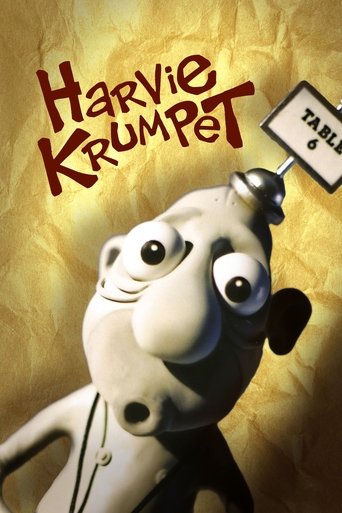
裸体哈维闯人生 (2003)
Harvie Krumpet
第76届奥斯卡金像奖最佳动画短片
1922年哈维出生在波兰山村一个伐木工的家庭,因为患有难以治愈的抽搐性疾病,他备受嘲笑,所以小时候多在家中跟随母亲学习。战争降临,哈维远渡重洋去异国他乡讨生活,先天不足的他只能干起捡破烂的工作。怎奈厄运如影随形,要么被打到骨折,要么无端遭雷劈,或者罹患严重哮喘。命运的残酷销蚀着哈维与生俱来的乐观和热情,他渐渐感到绝望。在命运的最底层,他听到了一尊雕像对他的启示,于是哈维化身裸体主义者以及素食主义者,开始了反抗命运之旅。正所谓否极泰来,在失去一颗睾丸后,哈维居然找到了生命的另一半……
演员阵容
- 杰弗里·拉什 — Narrator (voice)
- Kamahl — Statue of Horace (voice)
- John Flaus — Harvie (voice)
- Julie Forsyth — Baby Harvie / Lilliana / Church Singer (voice)
趣闻
- 拍摄地:澳大利亚
- 获奖:1 · 提名:1. 包括:奥斯卡最佳动画短片奖
Harvie Krumpet is a 2003 Australian animated tragicomedy short film written, directed and animated by Adam Elliot, and narrated by Geoffrey Rush. It tells the life story of Harvie Krumpet, a Polish-Australian man whose life is plagued by bad luck but who nevertheless remains optimistic.
Production
Adam Elliot conceived the idea behind Harvie Krumpet over a ten-year period, and wrote fourteen drafts of the script over three months. He created a 300-panel storyboard to visualise the film before the animation began. He described Harvie's character as "an amalgamation of many people I know", in addition to being partly autobiographical.
Harvie Krumpet was filmed in Melbourne over 15 months between October 2001 and January 2003. The film was shot in sequence in three-month blocks, interspersed with three-month blocks of building sets and models. Production began in Elliott's garage and subsequently took place in three separate studios, moving three times in order to accommodate the growing size of the sets. It was shot on Super 16 mm film using a Bolex camera.
The film was produced by clay animation using character models each about the size of a wine bottle. The models were first constructed using plasticine before pouring Carbog, a solid material used by mechanics, into moulds to form the bodies. They were then painted to appear like plasticine, and real plasticine around wire was used for the arms.
Harvie Krumpet was edited by Bill Murphy for eight days spread over several weeks. The original cut of 45–50 minutes of footage was reduced to a final cut of less than 23 minutes. Over 2000 sound clips were added during the sound design process and the film was converted to 35mm film in May 2003.
在维基百科阅读更多 · 文本来自维基百科,CC BY-SA 4.0。数据来自 Wikidata。
推荐
- 超级英雄美猴王:齐天儿 2023 · ★ 5.9
- 我的小马驹:最棒的礼物 2018 · ★ 7.5
- 飞兔大联盟 2022 · ★ 7.2
- 欢乐好声音:战栗 2024 · ★ 7.1
- 爵迹 2016 · ★ 7.1
- 机器肉鸡:星战特辑 2007 · ★ 7.2
- 雄狮少年 2021 · ★ 7.3
- 外星入侵者ZIM:魔幻入口 2019 · ★ 7.4
- Susie, the Little Blue Coupe 1952 · ★ 6.7
- 镜中奇遇记 1936 · ★ 7.2
- 功夫熊猫之师父的秘密 2011 · ★ 6.5
- 麦兜故事 2001 · ★ 7.1