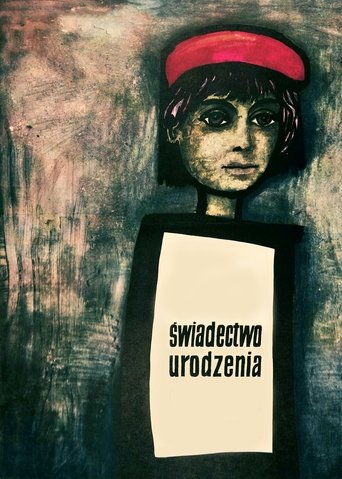
出生证明 (1961)
Świadectwo urodzenia
三个独立的故事通过孩子们的视角描绘了占领期间紧张的日常生活。 在《在路上》中,两位主角在九月的冲突中迷失了:一个是小男孩,另一个是运送他支队的无价值文件的士兵。 在《集中营来信》中,故事的主角是在占领期间帮助母亲的小男孩。 他们的宝贝是一件属于他们父亲的军官制服,父亲被关在战俘营里。 在《血滴》中,德国人在故事的主角——一个躲在孤儿院的犹太女孩身上发现了一系列典型的雅利安人特征。
- 上映日期
- 1961-10-02
- TMDB
- 7.2 / 10 (25)
- 片长(分钟)
- 1小时44分钟
- 类型
- 剧情, 战争
- 导演
- Stanisław Różewicz
演员阵容
- Henryk Hryniewicz — Janek
- Wojciech Siemion — Józef
- Edward Mincer — Zbyszek
- Andrzej Banaszewski — Heniek
- Pawel Rózewicz — Jacek
- Beata Barszczewska — Mirka
- Zofia Małynicz — Refuge Manager
- Barbara Rachwalska — Woman from the Forester
- Mieczysław Stoor — German Motocyclist
- Janusz Kłosiński — Shop Owner
- Barbara Wałkówna
- Stanisław Milski — Neighbour Ciziak
趣闻
Birth Certificate is a Polish war film from 1961 directed by Stanisław Różewicz, based on a screenplay co-written with the director's brother, Tadeusz Różewicz. The film consists of three separate novellas, each narrated from the perspective of children affected by the events of World War II.
Production
Birth Certificate was produced by the Film Group Rytm, under the artistic direction of Jan Rybkowski and the literary supervision of Aleksander Ścibor-Rylski. The inspiration for the film's director, Stanisław Różewicz, and his brother, poet Tadeusz Różewicz, came from real-life events. The ideas for the first two novellas (Na drodze, List z obozu) were based on the personal wartime experiences of the two brothers.
The brothers brought the script to Rytm in the spring of 1960, and on June 3 of the same year, a meeting of the Script Evaluation Commission took place, chaired by Tadeusz Karpowski. The script sparked lively discussion; its artistic value was generally appreciated, but many members of the commission were opposed to starting work on the project.
A significant contribution to the film's artistic quality came from the cinematographer Stanisław Loth and the set designer Tadeusz Wybult. The music for Birth Certificate was composed by Lucjan Kaszycki, while the film was edited by Czesław Raniszewski and Anna Rubińska. The film was shot in Łódź, Spała, Piotrków Trybunalski (at the train station and with a city panorama), and by the Pilica river.
在维基百科阅读更多 · 文本来自维基百科,CC BY-SA 4.0。数据来自 Wikidata。