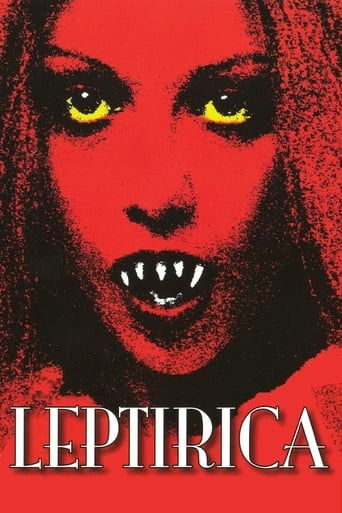
Leptirica (1973)
Лептирица
In einem kleinen serbischen Bauerndorf geht die Angst um: Ein Vampir sucht regelmäßig die örtliche Mühle heim und mordet. Zum Glück erklärt sich der Tagelöhner Strahinja bereit, den Vampir zur Strecke zu bringen. Er erhofft sich so bessere Chancen, den mürrischen Bauern Zivan um die Hand seiner Tochter Radojka zu bitten. Als auch Strahinja vom Vampir überfallen wird und nur mit Mühe und Not entkommen kann, machen sich die Männer des Dorfes erst gemeinsam auf die Suche nach dem Grab des Vampirs und helfen Strahinja dabei, die schöne Radojka zu entführen. In der Nacht vor der Hochzeit erlebt der aber eine böse Überraschung …
- Erscheinungsdatum
- 1973-04-15
- TMDB
- 6.5 / 10 (51)
- Laufzeit
- 1 Std. 5 Min.
- Genres
- Horror, Drama
- Regie
- Đorđe Kadijević
Besetzung
- Mirjana Nikolić — Radojka
- Petar Božović — Strahinja
- Vasja Stanković — Kmet
- Slobodan 'Cica' Perović — Živan
- Aleksandar 'Aca' Stojković — Purko
- Tanasije Uzunović — Pop
- Ivan Đurđević — Sredoje
- Bogoljub Petrović — Ceba
- Toma Kuruzović — Vule, vodeničar
- Branko Petković
Wissenswertes
Leptirica is a 1973 Yugoslav folk horror TV-film, directed by Serbian and Yugoslav director Đorđe Kadijević and based on the short story "After Ninety Years" (1880) by Serbian writer Milovan Glišić.
Production
In a 2023 interview, Kadijević stated that in the early 1970s, he was forced to turn away from cinema and venture into directing for television, as he had been a prominent figure of the Yugoslav Black Wave movement and the authorities' censorship in cinema was starting to strengthen:
All of us who had been making similar films—Dušan Makavejev, Žika Pavlović, Aleksandar "Saša" Petrović, Želimir Žilnik, Kokan Rakonjac and so on—had the "Black Wave" label essentially slapped on us because we mildly and restrainedly reacted in a critical manner to the apologetics of both the [Yugoslav communist] revolutionary past as well as the supposedly heroic, renewal-focused post-World War II enthusiasm lifting the country from the ashes of…
The movie was filmed in the village of Zelinje, near the river Drina, close to the city of Zvornik. The 19th century mill that appears in the movie is still in its original location. The film was made in less than a month.
Kadijević found the strange sounds that can be heard throughout the film with the help of the workers of Television Belgrade musical department. The sounds used were the recordings of a species of birds which lives in the uninhabited areas of India.
Auf Wikipedia weiterlesen · Text aus Wikipedia, CC BY-SA 4.0. Daten aus Wikidata.
Empfohlen
- Vampire Nation 2010 · ★ 6.2
- Salem's Lot - Brennen muss Salem 2024 · ★ 5.9
- Interview mit einem Vampir 1994 · ★ 7.4
- Salem 2 - Die Rückkehr 1987 · ★ 6.0
- Vampyres 1974 · ★ 6.0
- Nosferatu - Der Untote 2024 · ★ 6.7
- God Is a Bullet 2023 · ★ 6.3
- Begierde 1983 · ★ 6.7
- Die dunkle Saat 2023 · ★ 6.1
- Byzantium 2013 · ★ 6.3
- Priest 2011 · ★ 5.9
- Let Me In 2010 · ★ 6.8