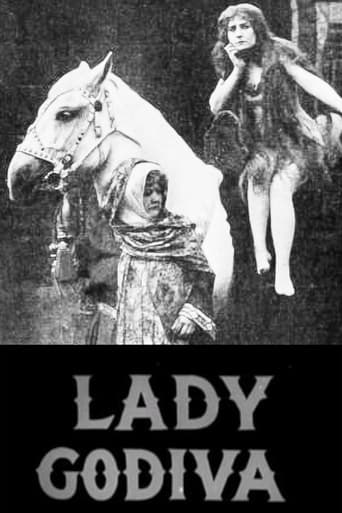
Lady Godiva (1911)
The story of how Lady Godiva came to ride naked through the streets of Coventry.
- Date of release
- 1911-10-20
- TMDB
- 5.7 / 10 (6)
- Runtime
- 10m
- Genres
- Drama
- Director
- J. Stuart Blackton
Casting
- Julia Swayne Gordon — Lady Godiva
- Robert Gaillard — Earl Leofric
- Kate Price
- Harry Ward
- Stanley Dunn
- Hal Wilson — Peeping Tom
- Alfred Hollingsworth
- Clara Kimball Young
- James Young
Interesting facts
Lady Godiva is a 1911 American silent historical drama film directed by J. Stuart Blackton and produced by Vitagraph Studios in Brooklyn, New York. Its scenario is based on a legendary incident in the life of Godiva, Countess of Mercia, who lived in England during the mid-11th century. Allegedly, the Anglo-Saxon noblewoman rode naked—covered only by her long hair—through the streets of Coventry to protest and abolish an oppressive tax imposed on that town's residents by her husband, Leofric, Earl of Mercia. The film, copies of which survive today, stars Julia Swayne Gordon in the title role with a supporting cast including Robert Maillard, Harold Wilson, and Kate Price.
Production
The film was produced in New York City at Vitagraph's plant and "studio yard" located near the intersection of East 15th Street and Locust Avenue in the Midwood neighborhood of Brooklyn. The medieval legend of Lady Godiva, which is the basis of the film, has been cited in historical accounts as early as 1307, more than 250 years after the noblewoman made her famous ride.
As early as mid-July 1911—three months before the film's actual release, the New York-based trade journal The Moving Picture World reported Vitagraph's plans to produce Lady Godiva and predicted it would be a success:The story of Lady Godiva will be depicted by the Vitagraph Company, who, with its usual good judgement and marvelous facilities, will produce a portrayal that will not only be valuable as a matter of general information and rare attr…
Promotion in 1911 of "the most famous bareback ride in history" relied on the most sensational aspect of the Godiva story: nudity. If, however, some theatergoers hoped to get a glimpse of a nude or even partially clad Julia Swayne Gordon, they were no doubt disappointed.
Read on Wikipedia · Text from Wikipedia, CC BY-SA 4.0. Data from Wikidata.
Recommended
- The Last Bus 2021 · ★ 6.5
- Eleanor the Great 2025 · ★ 6.8
- Heidi 2005 · ★ 7.8
- Edie 2018 · ★ 6.3
- The Truth About Emanuel 2013 · ★ 6.0
- Adopt a Highway 2019 · ★ 6.9
- Too Late Blues 1961 · ★ 6.4
- Won't Back Down 2012 · ★ 6.2
- Skater Girl 2021 · ★ 7.2
- Hungry Hearts 2015 · ★ 6.5
- Poor Cow 1967 · ★ 6.4
- Mansfield Park 2007 · ★ 6.1