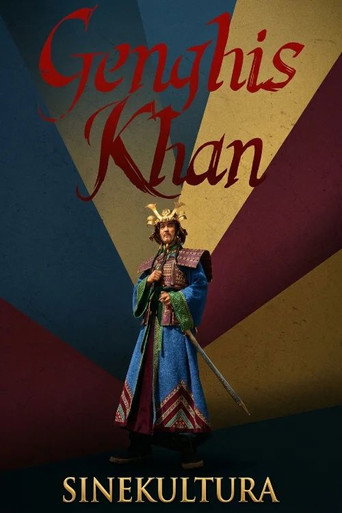
Genghis Khan (1950)
Ang Buhay ni Genghis Khan
Temujin, who later became Genghis Khan is wise, or sometimes cunning. He goes through several heroic episodes; competing at the Man of Men contest, falling in love with the enemy commander's daughter, and struggling to restore his demolished hometown. Meanwhile his steps guide him to be a great conqueror. Khan's witty, humorous side in his adolescent years before he takes the throne.
- Date of release
- 1950-11-07
- TMDB
- 6.6 / 10 (6)
- Runtime
- 1h 28m
- Genres
- Action
- Director
- Manuel Conde
Casting
- Manuel Conde — Genghis Khan
- Elvira Reyes — Li Hu
- Inday Jalandoni
- Jose Villafranca
- Lou Salvador
- Darmo Acosta
- Africa de la Rosa
- Ric Bustamante
- Ely Nakpil
- Juan Monteiro
- Andres Centenera
- Leon Lizares
Interesting facts
Genghis Khan is a 1950 Philippine epic historical drama film directed by Manuel Conde, based on the life of Mongol ruler and emperor Genghis Khan. It was the earliest film to depict the Khan's life. The film rights was sold to United Artists and was dubbed in 17 languages, earning $17 million worldwide.
Production
Genghis Khan was directed by Manuel Conde and was produced under his own studio Manuel Conde (MC) Productions. The film had a limited budget and equipment used for production was outdated even at that time. Due to cost-cutting measures, Conde used calesa horses which had smaller built compared to horses used in Western films. The film was made in black and white and has a duration of 88 minutes.
Conde as Manuel Urbano also did the film's screenplay. Botong Francisco, who is better known for his murals, was also involved in Genghis Khan as its production designer. Other members of the production team include Emmanuel Rojas (cinematographer), Rex Heinze (editor), Flaviano Villareal (sound) and Juan Silos Jr. (music).
As seen in the original posters, Manuel Conde shares directional credit with Lou Salvador as a concession to the actor for agreeing to shave his head for his villain role as Burchou. Despite this, Conde assumes full creative control in directing the film and Salvador didn't have a single directional input towards the film. New re-releases of the film now remove Salvador's directional credit and only bear Conde's name in the posters.
Read on Wikipedia · Text from Wikipedia, CC BY-SA 4.0. Data from Wikidata.
Recommended
- American Shaolin 1991 · ★ 6.9
- The Marine 3: Homefront 2013 · ★ 6.2
- The Warriors Gate 2016 · ★ 6.6
- Batman: Return of the Caped Crusaders 2016 · ★ 6.5
- The Program 1993 · ★ 6.5
- Henry Danger: The Movie 2025 · ★ 7.6
- Airborne 1993 · ★ 6.1
- Al Capone 1959 · ★ 6.6
- Absolution 2024 · ★ 5.9
- Killer Bean Forever 2008 · ★ 7.2
- Embattled 2020 · ★ 6.7
- Shootfighter: Fight to the Death 1993 · ★ 6.6