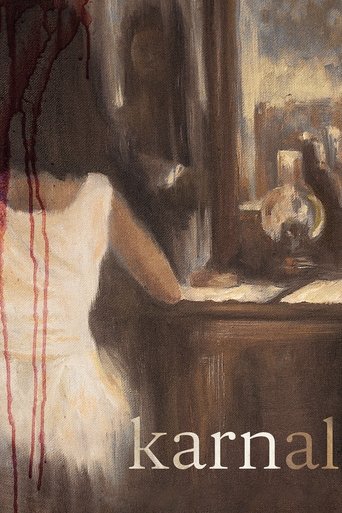
Of the Flesh (1983)
Karnal
The way of all flesh. The root of all evil.
When Narcing brings home his wife Puring to their hometown Mulawin in the 1930s, it sets off a series of events that include parricide, infidelity, betrayal, guilt and redemption.
- Date of release
- 1983-12-25
- TMDB
- 6.9 / 10 (11)
- Runtime
- 2h 3m
- Genres
- Drama, Horror
- Director
- Marilou Diaz-Abaya
Casting
- Charito Solis — Storyteller
- Phillip Salvador — Narcing
- Vic Silayan — Gusting
- Cecille Castillo — Puring
- Joel Torre — Goryo
- Grace Amilbangsa — Doray
- Pen Medina — Menardo
- Joonee Gamboa — Pekto
- Rolando Tinio — Bino
- Ella Luansing — Suling
- Vangie Labalan — Rosing
- Gil de Leon — Padre Julian
Interesting facts
- Awards: 0 · Nominations: 1
Karnal, internationally titled Of the Flesh, is a 1983 Philippine drama horror film directed by Marilou Diaz-Abaya. It was adapted and written by Ricky Lee from the legal story "To Take a Life" by Teresa Añover Rodriguez and produced by Benjamin G. Yalung. Set in the 1930s, during the American colonial era, it tells the story of a newlywed couple, Narcing and Puring, who arrive from Manila in the town of Mulawin, a place filled with violent and tragic pasts, a place likened to Hell by its storyteller, played by Charito Solis. Settling in Mulawin, they will witness misfortunes and violence, including rape, incest, parricide, and tyranny perpetrated by the cruel Gusting.
Production
The production of Karnal began when director Marilou Diaz-Abaya received a mysterious telephone call from someone going by the name "M-7", asking her if she agreed to do another film project. Since the caller on the line was mysterious, the publicist informed the director that the caller was none other than film producer Benjamin G. Yalung, and that "M-7" was his alias.
Ricky Lee, the director's screenwriting collaborator in Brutal and Moral, began to create a screenplay after he was informed of Cecille Castillo's perfect period-era looks and used the legal story of Añover-Rodriguez as its basis.
Fiel Zabat, the film's production designer, first studied the old paintings still hanging in the house of Diaz-Abaya's parents to capture the period feel. She also studied the paintings of Fernando Amorsolo and read reference materials on the painter. As a result, the house became one of the filming sites. Several of the old and genuine period-era costumes used for the film were borrowed from Zabat's grandmothers.
While watching Peque Gallaga's 1982 war drama film Oro, Plata, Mata, Abaya and Lee were amazed by Joel Torre's performance as Miguel, which prompted them to convince him to be part of the project. Still, they were worried because of his thick points and then, Lee suggested making Goryo a mute man.
During the film's production, Marilou Diaz-Abaya and Fiel Zabat began searching towns in Central Luzon that could serve as filming locations. As a result, they chose the town of Gapan in Nueva Ecija and its surrounding towns as the decided shooting site for the film.
Read on Wikipedia · Text from Wikipedia, CC BY-SA 4.0. Data from Wikidata.
Recommended
- Antichrist 2009 · ★ 6.6
- 825 Forest Road 2025 · ★ 5.9
- The Surrender 2025 · ★ 5.9
- Die My Love 2025 · ★ 6.1
- Mothers' Instinct 2024 · ★ 6.8
- The Eyes of My Mother 2016 · ★ 6.2
- Presence 2025 · ★ 6.1
- Pearl 2022 · ★ 7.2
- Castle Freak 1996 · ★ 6.1
- In Cold Blood 1967 · ★ 7.5
- Begotten 1991 · ★ 6.0
- Baby Blues 2008 · ★ 6.0