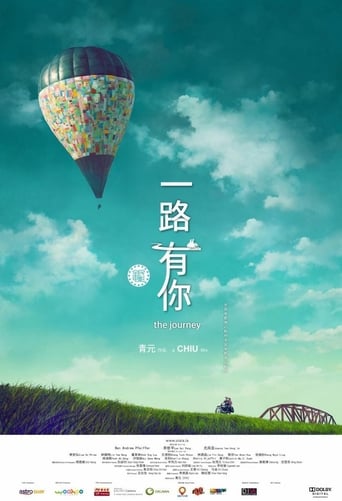
一路有你 (2014)
The Journey is a cross-continental story that explores the idea of culture, not just as tradition but as an expression of love. When Bee (Yew) returns to Malaysia for the first time in a decade - she introduces her conservative father Uncle Chuan (Lee) to her happy-go-lucky British fiancé, Benji (Pfeiffer). With Benji's lack of cultural understanding and comprehension of Chinese traditions, Chuan opposes their marriage. Unexpected circumstances ensue, and Chuan reluctantly submits to their union, on the condition that their wedding adheres to Chinese tradition. Part of that tradition is that Chuan must invite all of his childhood friends personally. So the quintessential odd couple, Benji and Chuan, embark on a cross country adventure to deliver the invitations. Despite language barriers and initial hesitation from both parties, the two men come to realize that their priorities are essentially one and the same.
- Erscheinungsdatum
- 2014-01-30
- TMDB
- 6.2 / 10 (8)
- Laufzeit
- 1 Std. 42 Min.
- Genres
- Komödie, Drama, Familie
- Regie
- Chiu Keng Guan
Besetzung
- Ben Andrew Pfeiffer — Benji
- Lee Sai Peng — Uncle Chuan
- Joanne Yew — Bee
- Siow Ho Phiew — Lian Pak Cik
- Lim Yew Beng — Lim Dan
- Khok Eng Loy — Tan Ah Kao
- Khong Tuck Khoon — Wong Poh Tuck
- Lim Yen Seng — Choo Chong Meng
- Tan Boon Hua — Cheong Dong Kin
- Chong Nyuk Ling — Lim Kee Huat
- Yeoh Ah Seng — Chew Hok Heng
- Hui Swee Meng — Khor Soon Choy
Wissenswertes
The Journey is a 2014 Malaysian Chinese-language comedy-drama film directed by Chiu Keng Guan and written by Ryon Lee. The film stars Ben Andrew Pfeiffer, Lee Sai Peng and Joanne Yew Hong Im. The story follows a father that finally allows his daughter to wed an English lad with a condition that he shall follow him on a journey around the nation to deliver their wedding invitation. The Journey was also invited to be screened at the 16th Far East Film Festival in Udine, Italy.
Production
Principal photography were held on various locations across Malaysia. These include the Cameron Highlands, Chew Jetty and Pinang Tunggal Railway Bridge in Penang (the latter which has since been dismantled), Aur Island, Kuala Lumpur, Baling in Kedah, Ipoh, and Sabah.
The film also features a real life Chingay procession in Johor Bahru, in which director Chiu had to incorporate into the film due to its small budget.
Auf Wikipedia weiterlesen · Text aus Wikipedia, CC BY-SA 4.0. Daten aus Wikidata.
Empfohlen
- Roll Bounce 2005 · ★ 6.9
- Foster 2011 · ★ 6.7
- Chang Can Dunk 2023 · ★ 6.7
- Zoe und Raven: Es weihnachtet sehr 2018 · ★ 6.7
- Die Bowling Gang 2000 · ★ 6.0
- Gold or Shit 2024 · ★ 6.8
- Im Dutzend billiger 1950 · ★ 6.4
- Meine Schwester Charlie - Der Film 2011 · ★ 6.7
- Der glücklichste Millionär 1967 · ★ 6.8
- Dear You 2026 · ★ 8.7
- Willkommen bei den Louds - Der Film 2021 · ★ 7.2
- Wo der rote Farn wächst 2003 · ★ 6.6