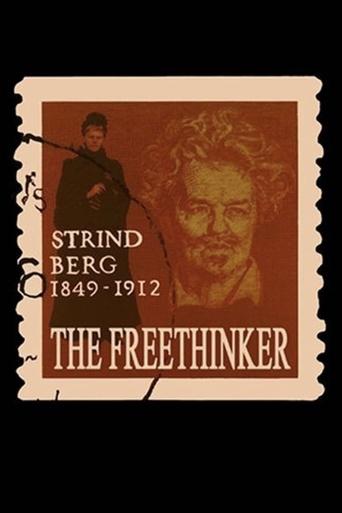
Fritänkaren (1994)
The film portrays the Swedish playwright, novelist, poet, essayist and painter August Strindberg's life 1849-1912. Through his extensive correspondence and literary production, from the supposed first work, the drama "The Free Thinker" (1869), to the posthumously published "The Occult Diary" (published 1977 ). But also his three wives, Siri von Essen, Frida Uhl and Harriet Bosse, and the children Karin, Greta and Hans are given space in the film. The unpublished first drama "The Free Thinker", depicts a young man forced to break with family and tradition to follow his conscience and ideals, becomes a prophecy about the author's own life.
- Date de sortie
- 1994-09-03
- TMDB
- 7.1 / 10 (9)
- Durée
- 4 h 36 min
- Genres
- Histoire, Drame
- Réalisateur
- Peter Watkins
Distribution
- Anders Mattsson — August Strindberg
- Lena Settervall — Siri von Essen
- Roland Borgström — Carl-Oskar Strindberg
- Ingela Berger — Ulrika Eleonora Strindberg
- Torsten Föllinger — August Strindberg (Old)
- Mikael Rubbestad — August Strindberg (12 Years Old)
- Emil Eriksson — August Strindberg (7 Years Old)
- Karin Rubbestad — Eva Karlsson
- Camilla Lindberg — Karin Strindberg (14 Years Old)
- Karin Jansson — Karin Strindberg (8 Years Old)
- Sofi Holt — Greta Strindberg (6 Years Old)
- Jonas Holt — Hans Strindberg (4 Years Old)
Anecdotes
Le Libre-Penseur est un film suédois de Peter Watkins sorti en 1994.
Genèse
En 1979, l'Institut Suédois du Cinéma et la télévision suédoise lui commandent un film sur la vie et l'œuvre d'August Strindberg, peintre, poète, photographe qui écrivit en 1869 une pièce intitulée Le Libre Penseur. Après 2 ans et demi de recherches, le film est annulé faute de financements.
En 1992, Peter Watkins reprend le projet et tourne Le Libre-Penseur (qui devait initialement s'intituler August Strindberg) dans le cadre d'un projet pédagogique de 2 ans impliquant 24 lycéens suédois. Ces derniers, à partir du scénario développé en 1972, participent aux différentes étapes du film : production, recherche (notamment sur les conditions sociales dans la Suède des années 1870), montage, costumes, direction.
Lire sur Wikipédia · Texte de Wikipédia, CC BY-SA 4.0. Données de Wikidata.
Recommandés
- Couleurs de l'incendie 2022 · ★ 6.8
- Mr. Turner 2014 · ★ 6.6
- Flo 2023 · ★ 6.3
- Séraphine 2008 · ★ 6.7
- Le Combattant 2022 · ★ 6.2
- Notre salut 2026 · ★ 6.5
- The Last Rifleman 2023 · ★ 6.6
- La Faute à Fidel! 2006 · ★ 7.1
- Austerlitz 1960 · ★ 6.7
- Eugénie Grandet 2021 · ★ 6.0
- Le Trésor d’Arne 1919 · ★ 7.1
- The Hill 2023 · ★ 7.7