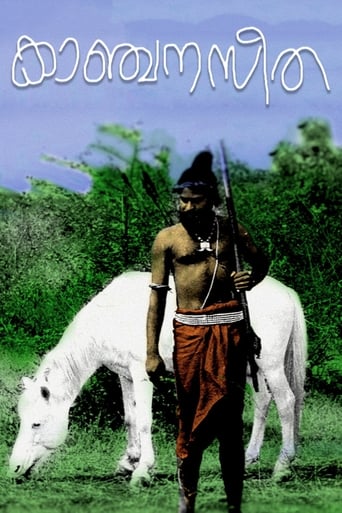
കാഞ്ചനസീത (1978)
The film interprets a story from the Uttara Kanda of the epic poem Ramayana, where Rama sends his wife, Sita, to the jungle to satisfy his subjects. Sita is never actually seen in the film, but her virtual presence is compellingly evoked in the moods of the forest and the elements. The film retells the epic from a womens' liberationist perspective, and is about the tragedy of power and the sacrifices that adherence to dharma demands, including abandoning a chaste wife.
- Erscheinungsdatum
- 1978-12-21
- TMDB
- 6.6 / 10 (13)
- Laufzeit
- 1 Std. 16 Min.
- Genres
- Drama
- Regie
- Govindan Aravindan
Besetzung
- Ramdas — Rama
- Keshav Panicker — Valmiki
- Ravindram Nair
- Chinnapuliah
- Venkateswarlu
- Kondavalasa Lakshmana Rao
Wissenswertes
- Basiert auf: Kanchana Sita
Kanchana Sita is a 1977 Indian Malayalam feature-length film scripted and directed by G. Aravindan. A mythological film, its story was adapted from C. N. Sreekantan Nair's play of the same name, which is a reworking of Valmiki's Ramayana.
Production
The film was produced by K. Ravindran Nair, who produced some of the most significant films that put Malayalam cinema on the world map. His productions also include memorable films of Aravindan, such as Thampu (1978), Kummatty (1979), Esthappan (1980), and Pokkuveyil (1981).
In Kanchana Sita, the roles of the epic heroes like are played by Adivasis (tribal members) from Andhra Pradesh known as the Rama Chenchus (also known as Koyas), who claim that they are the descendants of the Ikshvaku clan, to which Rama belonged. Aravindan's idea was not to use conventional actors, but to find people who had reached the state of awareness that the role required.
The film was shot in colour in less than three weeks during November and December 1976, entirely in Andhra Pradesh, partly on the banks of the Godavari, partly at Undavalli in Vijayawada, and in the Vicarabad forest belt in Telangana. Aravindan abandoned the typical alternation in setting of mythological films and dance dramas, including Sreekantan Nair's play, by moving Rama's story into the landscape Adivasis, imagining Ayodhya in the forest.
Filming took place at the time when the Emergency was declared in India. Police were combing the entire area around Rajamundhry in their hunt for the Maoist People's War Group. Members of the production team were interrogated by the police several times because they looked different from the natives.
The film was completed using simple devices such as table fans to rustle the leaves. A few unexpected things happened for the good while shooting the climax scene. For instance, a rare and unexpected early morning mist on the banks of Godavari made the whole scene ethereal.
Auf Wikipedia weiterlesen · Text aus Wikipedia, CC BY-SA 4.0. Daten aus Wikidata.
Empfohlen
- Apocalypto 2006 · ★ 7.7
- Last Ride – Manche Fesseln können gelöst werden 2009 · ★ 6.4
- Glamour Girl im Pferdestall 2011 · ★ 5.9
- Die My Love 2025 · ★ 6.1
- War Room 2015 · ★ 7.9
- Black Beauty 2020 · ★ 8.0
- Daddy Longlegs 2010 · ★ 6.6
- Most 2003 · ★ 7.3
- Jede Frau braucht einen Engel 1947 · ★ 7.1
- Dreamer - Ein Traum wird wahr 2005 · ★ 7.1
- Big Fish - Der Zauber, der ein Leben zur Legende macht 2003 · ★ 7.7
- Der König der Löwen 1994 · ★ 8.3