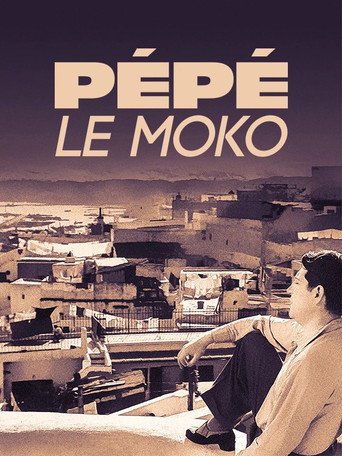
逃犯贝贝 (1937)
Pépé le Moko
恶名昭彰的逃犯贝贝(让·加宾献上演艺生涯标志性表演)是个被多方觊觎的人物:女人渴望他,对手企图毁灭他,警方更步步紧逼。藏身于迷宫般的阿尔及尔卡斯巴区时,贝贝尚能躲避警方追捕——直至一位巴黎浪荡女子的出现,驱使他赌上性命踏出藏身之地。朱利安·杜维威尔这部法国诗意现实主义里程碑之作是二十世纪最具影响力的电影之一。[标准收藏]
演员阵容
- Jean Gabin — Pépé le Moko
- Mireille Balin — Gaby, the Parisian
- Gabriel Gabrio — Carlos
- Lucas Gridoux — Inspector Slimane
- Gilbert Gil — Pierrot
- Line Noro — Inès, Pépé's mistress
- Saturnin Fabre — The Great Father
- Fernand Charpin — Régis
- 马塞尔·达里奥 — L'Arbi
- Charles Granval — Maxime
- Gaston Modot — Jimmy
- René Bergeron — Meunier
趣闻
- 拍摄地:马赛
Pépé le Moko is a 1937 French film directed by Julien Duvivier starring Jean Gabin, based on a novel of the same name by Henri La Barthe and with sets by Jacques Krauss. An example of the 1930s French movement known as poetic realism, it recounts the trapping of a gangster on the run in Algiers, who believes that he is safe from arrest in the Casbah.
Production
Principal photography for the film was shot at a replica of the Casbah at Joinville-le-Pont, near Paris, and only exterior shots were filmed in Algiers. Lead actress Mireille Balin never set foot in Algeria during the making of the film.
The set design that Jacques Krauss created for the film established the setting in the Casbah. With little to no location shooting, Krauss' work was central to the production of the film. At that time in French cinema, shooting on sets was preferred to location shooting because of the artistic control it gave to designers such as Krauss.
Duvivier utilized multiple methods of creating a sense of realism despite filming on a set. He introduced the setting of the Casbah with documentary style footage. This included longer establishing shots of the Casbah in its entirety along with shorter shots that showed the chaotic atmosphere. Also, Duvivier included longer shots when focusing on characters. This technique made scenes feel like they were happening in real time.
Another element of the production was the film noir style. Multiple shots include the shadow of venetian blinds or other pieces of Krauss' set design that obscure characters with shadows, which is a common effect used in the genre of film noir.
Dialogue was important to French filmmaking at the time Pépé le Moko was made because of the recent introduction of sound. The screenplay and dialogue were written separately for this film with Henri La Barthe, Julien Duvivier, and Jacques Constant credited for writing the screenplay, and Henri Jeanson for the dialogue.
在维基百科阅读更多 · 文本来自维基百科,CC BY-SA 4.0。数据来自 Wikidata。