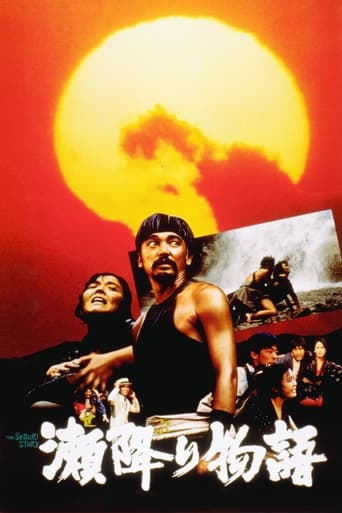
瀬降り物語 (1985)
The culturally isolated, nomadic Seburi people of western Japan are the subject of this tragedy about a few of the community's members who especially experience difficulties as modern Japan encroaches on their world. The setting is World War II, and conflicts have already arisen when the military police come to take Seburi men away into the army. Still following their own customs that can be harsh at times, and are particularly cruel to women (women must give birth alone and unaided, a woman's adultery is punished by burying her up to her neck in the earth and then leaving her for days), the Seburi are mainly treated with fear and animosity by the non-Seburi townspeople of the region. Along with the hardships arising from cultural clashes, nature's own vagaries present other challenges to the Seburi -- who still lived in tents until the 1950s. Winter avalanches and snowstorms cause as much havoc as the tensions engendered by the slow encroachment of the modern world.
Distribution
- 萩原健一 — Hajime Kinoshita
- 藤田弓子 — Kuni
- 早乙女愛 — Hana
- Michiko Kono — Hide
- 永島暎子 — Mitsu
- Ken Mitsuishi — Jiro
- 内藤剛志 — Kazuo
- Hideo Murota — Kuzushiri
- Taiji Tonoyama — Kamezo
- 岡本麗 — Tome
- Asao Uchida — Ayutachi
- Nenji Kobayashi
Anecdotes
Seburi monogatari (瀬降り物語) est un film japonais réalisé par Sadao Nakajima, sorti en 1985.
Lire sur Wikipédia · Texte de Wikipédia, CC BY-SA 4.0. Données de Wikidata.
Recommandés
- La Ballade de Narayama 1983 · ★ 7.5
- La Jeune Fille 1960 · ★ 7.0
- Skin 2009 · ★ 6.4
- 1 2020 · ★ 6.7
- Edith, en chemin vers son rêve 2018 · ★ 6.3
- Holy Lands 2019 · ★ 6.1
- A Question of Faith 2017 · ★ 7.5
- Maborosi 1995 · ★ 7.5
- Charm City Kings 2020 · ★ 7.8
- Cardboard Boxer 2016 · ★ 6.5
- Brotherly Love 2015 · ★ 7.0
- Salomé 2013 · ★ 6.1