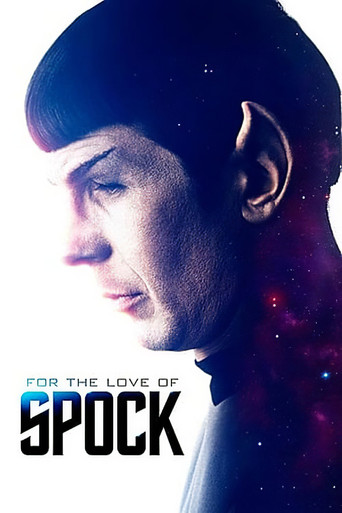
For the Love of Spock (2016)
Lunga vita...
I cinquant’anni della serie tv Star Trek vengono celebrati attraverso uno dei suoi più iconici personaggi: Spock, interpretato dall’attore Leonard Nimoy. Cogliendo l’occasione, Nimoy ripercorre carriera e vita personale davanti alle telecamere dirette dal figlio Adam…
- Data di uscita
- 2016-09-09
- TMDB
- 7.4 / 10 (199)
- Durata
- 1 h 45 min
- Generi
- Documentario
- Regista
- Adam Nimoy
Cast
- William Shatner — Self
- George Takei — Self
- J.J. Abrams — Self
- Simon Pegg — Self
- Chris Pine — Self
- Adam Nimoy — Self
- Nichelle Nichols — Self
- Zachary Quinto — Self
- Zoe Saldaña — Self
- Neil deGrasse Tyson — Self
- Jim Parsons — Self
- Jason Alexander — Self
Curiosità
For the Love of Spock is a 2016 American documentary film about actor Leonard Nimoy produced by 455 Films and directed by his son Adam Nimoy, who started it before his father's death, at the age of 83, on February 27, 2015.
Production
By Thanksgiving 2014, Adam Nimoy started working with his father in a documentary about Spock, to commemorate Star Trek: The Original Series’s 50th anniversary. After Leonard Nimoy's passing on February 27, 2015, the outpouring of affection from Star Trek fans prompted him to widen the film’s scope to encompass his father’s life and career beyond Spock.
To license Spock's still photographs and film clips from television and feature films in time to complete the documentary by 2016, Adam Nimoy launched a Kickstarter campaign in June 2015, aiming to collect US$600,000 in one month which attracted worldwide interest. By the end of the campaign, 9,439 backers pledged US$662,640, making it the most successful crowdfund of the period.
Production continued with interviews of William Shatner, George Takei, Walter Koenig, Nichelle Nichols, Chris Pine, Zachary Quinto, Simon Pegg, Zoe Saldaña, Jim Parsons, Jason Alexander, Neil deGrasse Tyson and J. J. Abrams.
Adam Nimoy appeared as himself in "The Spock Resonance", the November 5, 2015, episode of the CBS sitcom The Big Bang Theory, in which he interviewed Sheldon Cooper (Jim Parsons) for the documentary on his father, who made a voice cameo in the episode "The Transporter Malfunction" in the series' fifth season.
It had been stated that Quinto would provide narration for the documentary, but Adam Nimoy found that there were "so many archival interviews and voice recordings" that narration was not needed.
Leggi su Wikipedia · Testo da Wikipedia, CC BY-SA 4.0. Dati da Wikidata.
Consigliati
- I Am Heath Ledger 2017 · ★ 7.3
- Marvel - Dietro la maschera 2021 · ★ 7.1
- Il "Making of" di Hawkeye 2022 · ★ 7.2
- Sidney Poitier 2022 · ★ 6.9
- Avatar: la Via dell’Acqua – Lo Speciale 2022 · ★ 7.2
- Riccardo III - Un uomo, un re 1996 · ★ 6.8
- Whitney Houston - Stella senza cielo 2018 · ★ 7.3
- I Bee Gees - Come curare un cuore infranto 2020 · ★ 7.7
- Downloaded 2013 · ★ 6.5
- John Candy: I Like Me 2025 · ★ 7.9
- The Class of ‘92 2013 · ★ 7.1
- Love, Marilyn 2013 · ★ 6.5