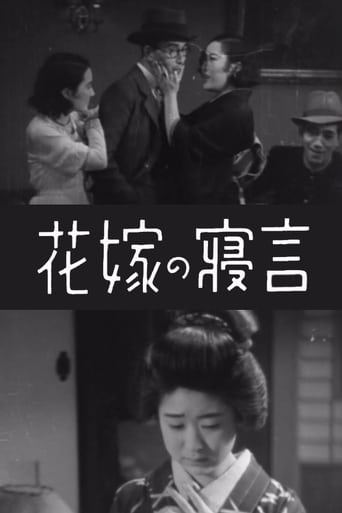
花嫁の寝言 (1933)
This pair of gentle yet witty and inventive comedies from the director of The Neighbour's Wife and Mine typify both the formal experimentation of early Japanese sound cinema and the social milieux that Shochiku tended to depict. 'Virtually plotless, and feeling more like comic sketches than fully developed stories,' writes Arthur Nolletti, Jr, 'these light comedies, or farces, take a wholly trivial matter (often a socially embarrassing situation) and use it as a springboard for a succession of gags.' Much of the films' distinction comes from the wit of Gosho's direction, the imaginative use of the new sound technology and the charm of the acting, particularly of the heroines (Kinuyo Tanaka in Bride; Hiroko Kawasaki in Groom). Yet in both films, Gosho finds room for some shrewd observation of character and environment, subtly exploring the values and assumptions of the suburban petit bourgeoisie.
- Date de sortie
- 1933-01-14
- TMDB
- 7.0 / 10 (1)
- Durée
- 57 min
- Genres
- Comédie
- Réalisateur
- Heinosuke Gosho
Distribution
- Kinuyo Tanaka — Haruko, bride
- Chōko Iida — Neighbor
- Tatsuo Saitō — Saida
- 小林十九二 — Komura
- 逢初夢子 — Natsuko, dancer
- Takeshi Sakamoto — Thief
- 江川宇礼雄 — Enatsu
- 大山健二 — Okubo
- 谷麗光 — Hiyama
- 水久保澄子 — Waitress
- 藤田房子 — Waitress
- Reikichi Kawamura — Neighbor's husband
Anecdotes
Les Rêves de la jeune fille mariée ou La mariée parle dans son sommeil (花嫁の寝言, Hanayome no negoto) est un film japonais réalisé par Heinosuke Gosho et sorti en 1933.
Lire sur Wikipédia · Texte de Wikipédia, CC BY-SA 4.0. Données de Wikidata.
Recommandés
- Chris D'Elia: Man on Fire 2017 · ★ 6.2
- Bill Burr: Drop Dead Years 2025 · ★ 7.2
- The Railrodder 1965 · ★ 6.8
- Le Vagabond 1915 · ★ 6.5
- Le Kid en kimono 1958 · ★ 6.4
- Ali Wong: Single Lady 2024 · ★ 6.4
- Touche pas à mon gazon 1977 · ★ 6.6
- L'année des Mariages 2019 · ★ 5.9
- Eddie Murphy Raw 1987 · ★ 7.2
- Shane Gillis: Beautiful Dogs 2023 · ★ 7.0
- Laurel Et Hardy - Les Deux Légionnaires 1931 · ★ 6.8
- Gabriel Iglesias: I'm Sorry for What I Said When I Was Hungry 2016 · ★ 7.1