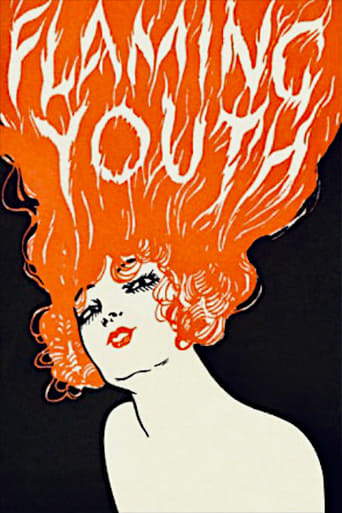
Flaming Youth (1923)
When Mona Frentiss dies, she has her confidante "Doctor Bobs" watch over her family, especially her youngest daughter Patricia. The family has been raised in a most unconventional manner, with Mona having a much younger lover and the father Ralph keeping his own lover on the side. As Patricia grows older, she attracts the attention of her mother's former lover, the much older (than Patricia, who in the book is in her early to mid teens) Carey Scott. Patricia tempts fate with her wild ways, nearly loses her virtue to a musician aboard an ocean-going boat, and is saved in time by Carey. Realizing that he is the man for her, she settles down into an experimental marriage.
- Data de estreia
- 1923-11-12
- TMDB
- 3.8 / 10 (4)
- Duração
- 1 h 30 min
- Géneros
- Drama
- Realizador
- John Francis Dillon
Elenco
- Colleen Moore — Patricia Fentriss
- Milton Sills — Cary Scott
- Elliott Dexter — Dr. Bobs
- Sylvia Breamer — Dee Fentriss
- Myrtle Stedman — Mona Fentriss
- Betty Francisco — Connie Fentriss
- Phillips Smalley — Ralph Fentriss
- Walter McGrail — Jamieson James
- Ben Lyon — Monty Standish
- George Barraud — Fred Browning
- John Patrick — Warren Graves
- Gino Corrado — Leo Stenak
Curiosidades
- Baseado em: Flaming Youth
Flaming Youth is a 1923 American silent drama film directed by John Francis Dillon and starring Colleen Moore and Milton Sills, based on the novel of the same name by Samuel Hopkins Adams. Associated First National produced and distributed the film. In his retrospective essay "Echoes of the Jazz Age", writer F. Scott Fitzgerald cited Flaming Youth as the only film that captured the sexual revolution of the Jazz Age. The film is now considered partially lost. One 11 minute reel survives and is housed at the Library of Congress.
Background
Prior to Flaming Youth, several films used the flapper cultural phenomenon as subject matter, such as The Flapper (1920) starring Olive Thomas, but the financial success of Flaming Youth made it the movie credited with launching a cycle of movies about flappers and helping Colleen Moore be seen as the originator of the screen flapper.
The film's marketing emphasized the racier aspects of the story, and a "skinny-dipping" sequence shot in silhouette (which still largely survives in the Library of Congress) was used in the film's advertising extensively. The ads also boasted "neckers, petters, white kisses, red kisses, pleasure mad daughters, [and] sensation craving mothers." The book contained adult subjects which were largely glossed over in the film.
Ler na Wikipédia · Texto da Wikipédia, CC BY-SA 4.0. Dados do Wikidata.
Recomendados
- O Sentido do Fim 2017 · ★ 6.3
- Os Mendigos da Vida 1928 · ★ 7.1
- Brand Upon the Brain! 2007 · ★ 6.6
- A Luta por um Ideal 2012 · ★ 6.2
- Imperial Dreams 2014 · ★ 6.5
- Rememory 2017 · ★ 6.1
- Tigertail 2020 · ★ 6.7
- Indesculpável 2021 · ★ 7.4
- A Vida Secreta das Abelhas 2008 · ★ 7.5
- A Fita Azul 2012 · ★ 6.4
- Profundo como o Mar 1999 · ★ 6.6
- The Poker House 2008 · ★ 6.2