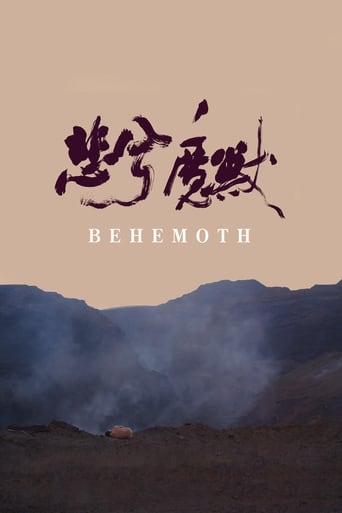
悲兮魔兽 (2015)
Under the sun, the heavenly beauty of grasslands will soon be covered by the raging dust of mines. Facing the ashes and noises caused by heavy mining , the herdsmen have no choice but to leave as the meadow areas dwindle. In the moonlight, iron mines are brightly lit throughout the night. Workers who operate the drilling machines must stay awake. The fight is tortuous, against the machine and against themselves. Meanwhile, coal miners are busy filling trucks with coals. Wearing a coal-dust mask, they become ghostlike creatures. An endless line of trucks will transport all the coals and iron ores to the iron works. There traps another crowd of souls, being baked in hell. In the hospital, time hangs heavy on miners' hands. After decades of breathing coal dust, death is just around the corner. They are living the reality of purgatory, but there will be no paradise.
- Fecha de estreno
- 2015-11-11
- TMDB
- 7.5 / 10 (60)
- Duración
- 1 h 35 min
- Géneros
- Documental
- Director
- Zhao Liang
Curiosidades
Behemoth is a Chinese documentary film directed by Zhao Liang about the environmental, sociological, and public health effects of coal-mining in China’s Inner Mongolia Autonomous Region. Loosely based on Dante Alighieri's Divine Comedy, Liang’s documentary has been lauded for its surreal cinematography and poignant imagery. The film was released in competition on September 11, 2015 at the 72nd Venice International Film Festival. The film was banned in China. Liang commented on the ban, saying that "even though environmental protection is a national policy, but the regional government quite disliked this type of film (虽然环保是国家政策,但是地方政府对这种电影很反感)".
Production
Created with a limited cast and crew, Behemoth is an example of the burgeoning wave of independent documentaries and films made with limited support and funding. Without the restrictions of a larger production company, these film-makers are able to express more politically scathing ideas without having to cater to the general box-office audience.
Zhao Liang’s documentary only loosely follows the idea of what a movie should be, and instead expresses itself as a form of visual poetry. Limited dialogue, backing score, and an abandonment of conventional cinematic techniques underscores the larger political message of Behemoth.
The cinematography is strongly symbolic and contains myriad allusions to Dante Alighieri's Divine Comedy, adopting both its character archetypes and general plot structure. The narrator, a representation of Dante, follows a stand-in for Virgil, who carries a mirror on his back – reflecting the eye of the viewer back on themselves.
The documentary is composed of three chapters, demarcated by a color transition and a general tonal shift. The film starts in the strip mine, Liang’s stand-in for the Inferno or Hell, which is identified with the color red. As the film progresses, the countryside surrounding the pit mines and the lives of its inhabitants is portrayed through a blue transition as Purgatory.
Leer en Wikipedia · Texto de Wikipedia, CC BY-SA 4.0. Datos de Wikidata.
Recomendadas
- Zero Days 2016 · ★ 7.4
- Tarantino total 2019 · ★ 7.2
- El chico que conquistó Hollywood 2002 · ★ 6.6
- We Live in Public 2009 · ★ 6.8
- Habitación 237 2012 · ★ 6.1
- One Child Nation 2019 · ★ 7.2
- 78/52: La escena que cambió el cine 2017 · ★ 7.1
- La doctrina del shock 2009 · ★ 7.1
- Bienvenidos a Chechenia 2020 · ★ 7.0
- Bobby Robson: More Than a Manager 2018 · ★ 7.0
- One More Time with Feeling 2016 · ★ 7.8
- Disclosure 2020 · ★ 7.8