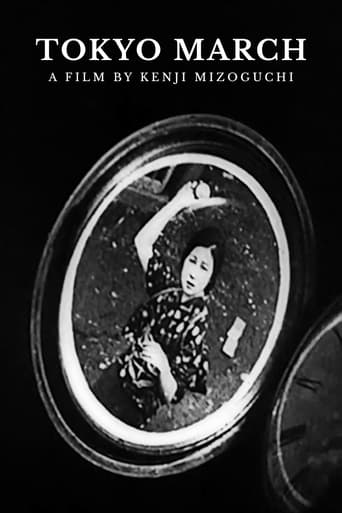
东京进行曲 (1929)
東京行進曲
大富豪藤本从壮年时期开始就对女性横行霸道,肆虐花柳界。然而,当他偶然看上的年轻艺妓折枝意外地得知他是昔日如同废鞋般抛弃的女人的遗物时,悔恨之情如同铁锤般袭来。为了弥补年轻时的过错,藤本试图在暗中保护折枝的幸福,但命运却如此讽刺,我的儿子良树不知道折枝是同父异母的妹妹,竟然爱上了她。此外,良树的竹马朋友佐佐久间也被折枝吸引,以折枝为中心,恋情复杂地盘旋。折枝也继藤本的魔手之后,为两人之间的隔阂而苦恼。此外,良树的妹妹、社交界的花样早百合子,竟然与她的见解相反,爱上了佐久间。这个真正大都市东京的一角,如今仍在令人眼花缭乱地持续运转,仿佛被因缘之线操纵着,留下一抹讽刺的微笑,就这样度过了今天。
演员阵容
- 夏川静江 — 道代(後に折枝)
- 一木札二 — 藤本良樹
- 高木永二 — 藤本良樹の父(富豪)
- 小杉勇 — 佐久間雄吉
- 入江隆子 — 早百合
- 佐久間妙子 — 早百合の妹なつ子
- 瀧花久子 — 澄江(後にるり子)
- 神田俊二 — ピアニスト山野
- 南部彰三 — 劇作家島津健
- 谷幹一 — 洋画家松並信男
- 見明凡太朗 — 松並の弟敏男
- 金平軍之助 — 子爵工藤三郎
趣闻
Tokyo March is a 1929 Japanese silent drama film directed by Kenji Mizoguchi. It is one of the left-leaning "tendency films" Mizoguchi made in the late 1920s. Only a fragment of the film exists today.
Background
The success of the 1929 song "Tōkyō kōshinkyoku", sung by Chiyako Satō, led to the composure of a serialised novel by Hiroshi Kikuchi, the production of Mizoguchi's film by the Nikkatsu studio (while the novel was still unfinished), and even a stage play. Originally planned as a part-talkie with sound interludes containing music, the film was eventually released as a complete silent film.
在维基百科阅读更多 · 文本来自维基百科,CC BY-SA 4.0。数据来自 Wikidata。