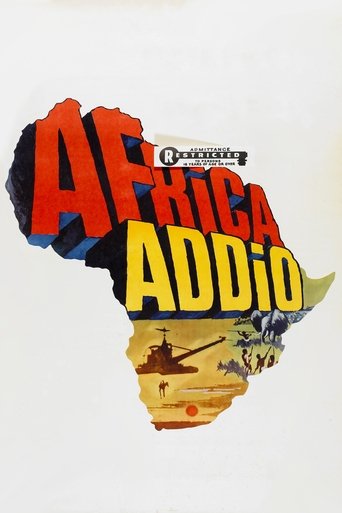
さらばアフリカ (1966)
Africa Addio
ヤコペッティ監督が約3年の歳月を費やし、独立運動が激化したアフリカ諸国の混迷の様を捉えたドキュメンタリー。おなじみの“やらせ”疑惑が論じられた一方で、終盤のコンゴ動乱では傭兵たちによる略奪・虐殺の一部始終を撮影。さらに本物の処刑シーンまでフィルムに収めたため、ヤコペッティ監督が殺人教唆の罪で告訴される事態に。イタリア司法局の調査により無罪となったが、本作を最後にヤコペッティはドキュメンタリーの撮影をやめてしまった。
- 公開日
- 1966-02-11
- TMDB
- 6.3 / 10 (56)
- 上映時間(分)
- 2時間19分
- ジャンル
- ドキュメンタリー, 戦争
- 監督
- グァルティエロ・ヤコペッティ, Franco Prosperi
- シリーズ
- Mondo Cane Collection
キャスト
- Sergio Rossi — Narrator (voice)
- Jomo Kenyatta — (archive footage)
- グァルティエロ・ヤコペッティ — Himself (uncredited)
- Julius Nyerere — Himself (uncredited)
- Moïse Kapenda Tshombe — Himself (uncredited)
- Richard Gordon Turnbull — Himself (uncredited)
- Ian Yule — Himself (uncredited)
豆知識
Africa Addio is a 1966 Italian mondo documentary film co-directed, co-edited and co-written by Gualtiero Jacopetti and Franco E. Prosperi with music by Riz Ortolani. Jacopetti and Prosperi had gained fame as the directors of Mondo Cane in 1962.
Production
The film was shot over the course of three years across most of sub-Saharan Africa. Most notably, the film features footage from the DR Congo, Tanganyika, Zanzibar, Uganda, Rwanda, Portuguese Angola, Kenya and South Africa. The documentary also includes some behind-the-scenes footage from the 1964 film Zulu. Production was done on 35mm, a rarity for documentaries, which were almost always shot on 16mm at the time.
The filmmakers were in near-constant danger for most of filming, with Tanganyika and Zanzibar being especially dangerous. In Zanzibar, their planes were shot at and they witnessed rebels lighting a plane crewed by Germans on fire and capturing the people inside. In Dar es Salaam, they were almost shot for photographing a massacre. Jacopetti suffered a cut after a soldier smashed their vehicle's windshield with the butt of his rifle.
A soundtrack of the music used in the film was later released. The composer was Riz Ortolani (who had scored Mondo Cane that featured the tune later used for the hit single More). When making Africa Addio, lyrics were added to Ortolani's title theme, making a song called "Who Can Say?" that was sung by Jimmy Roselli.
Prior to the film's release, allegations arose that a scene depicting the execution of a Congolese Simba rebel was actually a murder done for the cameras. This resulted in co-director Gualtiero Jacopetti being arrested on charges of snuff filming. The film's footage was seized by police, and the editing process was halted during the legal proceedings. He was acquitted after he and co-director Franco E.
A tie-in book with the same title, written by John Cohen, was released by Ballantine to coincide with the film's release.
Wikipediaで続きを読む · テキストはWikipedia、CC BY-SA 4.0。データはWikidata。
おすすめ
- 娘は戦場で生まれた 2019 · ★ 8.2
- Room 237 2012 · ★ 6.1
- Night Will Fall 2014 · ★ 7.6
- The Kid Stays in the Picture 2002 · ★ 6.6
- 78/52 2017 · ★ 7.1
- The Cave 2019 · ★ 7.2
- H.H. Holmes: America's First Serial Killer 2004 · ★ 6.2
- インサイド・ディープ・スロート 2005 · ★ 6.4
- Gonzo: The Life and Work of Dr. Hunter S. Thompson 2008 · ★ 6.9
- Z Channel: A Magnificent Obsession 2004 · ★ 7.1
- I Called Him Morgan 2016 · ★ 7.0
- Tony Hawk: Until the Wheels Fall Off 2022 · ★ 7.7