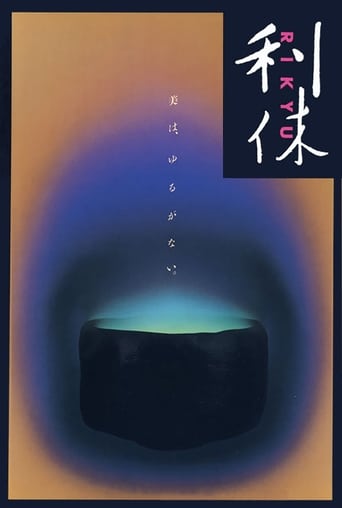
Rikyu (1989)
利休
En el siglo XVI, todas las artes florecían en Japón, como también las guerras y las intrigas por el poder entre los distintos señores feudales. Rikyu, un sereno y prudente maestro del té, tratará de templar la mayor ambición de su poderoso señor: crear un gran imperio japonés en el Pacífico, unificando Japón e invadiendo China. El uso de las invitaciones oficiales para las ceremonias del té le servirán a Rikyu para llevar a cabo sus delicadas negociaciones diplomáticas.
- Fecha de estreno
- 1989-09-15
- TMDB
- 7.5 / 10 (35)
- Duración
- 2 h 15 min
- Géneros
- Drama
- Director
- 勅使河原宏
- Colección
- Rikyu
Reparto
- 三国連太郎 — Rikyu
- 三田佳子 — Riki's Wife
- 山崎努 — Hideyoshi Toyotomi
- 岸田今日子 — Wife
- Tanie Kitabayashi — Mother
- 田村亮 — Lord Hidenaga
- 二代目 松本白鸚 — Lord Oda
- 二代目 中村吉右衛門 — Lord Ieyasu
- 十代目 坂東三津五郎 — Mitsanari
- 久保明 — Geni
- 嵐圭史 — Orike
- 井川比佐志 — Soji
Curiosidades
- Premios: 0 · Nominaciones: 1
Rikyu is a 1989 Japanese drama film about Sen no Rikyū, a 16th-century master of the Japanese tea ceremony, directed by Hiroshi Teshigahara. The film was adapted from the novel Hideyoshi to Rikyu by Yaeko Nogami. The film was ranked the 7th best film of the year by Kinema Junpo in 1989. It was one of two major biographical drama films directed in 1989 about the life of Sen no Rikyū, the other being Death of a Tea Master by Kei Kumai. Rikyu was selected as the Japanese entry for the Best Foreign Language Film at the 62nd Academy Awards but was not accepted as a nominee.
Background
Director Teshigahara, himself a master and teacher of the Japanese traditional art of ikebana, brings the viewer into appreciation and deep sympathy for Rikyu's aesthetic idealism and his careful diplomatic efforts to avoid excessive entanglement in political affairs. The film itself is very studied in its aestheticism, and very expressive of the shocking force of life intruding into the guarded hermetic space of the artist/idealist.
Leer en Wikipedia · Texto de Wikipedia, CC BY-SA 4.0. Datos de Wikidata.
Recomendadas
- Every Day a Good Day 2018 · ★ 7.2
- Rebelión 1967 · ★ 8.2
- El final del verano 1961 · ★ 7.5
- Cuentos de la luna pálida 1953 · ★ 8.0
- Harakiri 1962 · ★ 8.5
- Tenchu! 1969 · ★ 7.0
- Los siete samuráis 1954 · ★ 8.5
- La fortaleza escondida 1958 · ★ 8.0
- Gohatto 1999 · ★ 6.6
- Barbarroja 1965 · ★ 8.2
- La leyenda del samurái (47 Ronin) 2013 · ★ 6.2
- Cuentos de Tokio 1953 · ★ 8.2