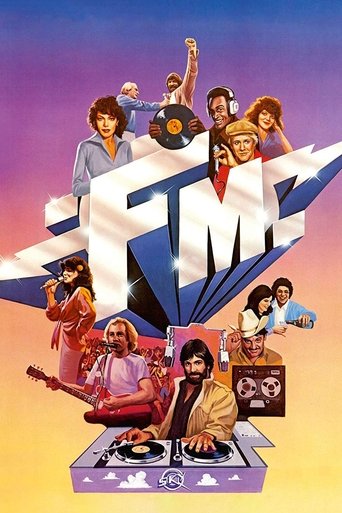
捉狂DJ (1978)
FM
When a liberal music station's owners decide to introduce army recruitment ads, despite the protests of its manager, the rebellious DJs are determined to fight back, no matter the cost.
- 上映日期
- 1978-04-28
- TMDB
- 6.8 / 10 (23)
- 片长(分钟)
- 1小时44分钟
- 类型
- 喜剧, 剧情, 音乐
- 导演
- John A. Alonzo
演员阵容
- Michael Brandon — Jeff Dugan
- 艾琳·布伦南 — Mother
- Alex Karras — Doc Holiday
- 克莱文·利特尔 — Prince
- 马丁·马尔 — Eric Swan
- Cassie Yates — Laura Coe
- Linda Ronstadt — Self
- Jimmy Buffett — Self
- 诺曼·劳埃德 — Carl Billings
- Jay Fenichel — Bobby Douglas
- James Keach — Lt. Reach
- Joe Smith — Albert Driscoll
趣闻
- 预算:US$200万
FM is a 1978 American comedy drama film about internal conflicts at an FM radio station directed by John A. Alonzo and starring Michael Brandon, Eileen Brennan, Alex Karras, Cleavon Little, Martin Mull and Cassie Yates with special appearances by Linda Ronstadt and Jimmy Buffett in his feature film debut. The screenplay was written by Ezra Sacks.
Production
The story unfolds across a background of concerts, broadcast music, appearances by various rock stars, and public appearances by the station's DJs. A minor sub-theme to the film is the competition between QSKY and another area radio station, KLAX. The major event of that sub-theme occurs when Jeff arranges to broadcast a live concert by Linda Ronstadt that is being sponsored by a competing radio station.
Martin Mull appears in his feature film debut as libidinous, egotistical DJ Eric Swan. Rounding out the cast are Cleavon Little, who plays the Prince of Darkness, QSKY's overnight host (Little had previously played a disc jockey in the film Vanishing Point in 1971); Eileen Brennan as "Mother", the 40-something nighttime DJ; Alex Karras as "Doc Holiday", the midday DJ with the lowest ratings on the station who is eventually let go after the survey…
Record company executive Irving Azoff participated in the making of the film as executive producer, but he disowned it before release and asked that his name be removed from the credits, a request which Universal granted. Azoff said the film was "not an authentic representation of the music business" and that the studio reneged on its promise to allow him creative control over it, particularly regarding selections of music.
在维基百科阅读更多 · 文本来自维基百科,CC BY-SA 4.0。数据来自 Wikidata。