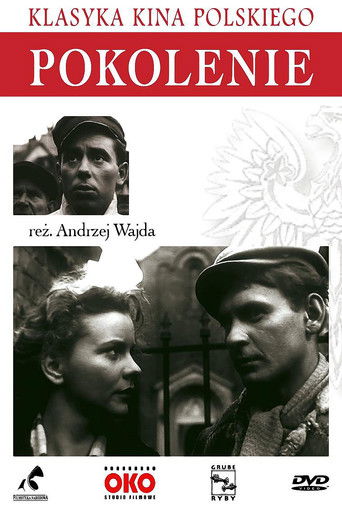
一代人 (1955)
Pokolenie
在被德国占领的波兰,年轻一代长大了。Stach就是其中一个,他和朋友们起初只是自发地从事危险的抵抗活动,总的来说是无组织无目的。后来在一个慈祥的共产党干部的带领下,他接触到了地下组织。当看到那个勇敢美丽的青年领袖Dorota时,他就加入了进去并与Dorota坠入爱河。接着Stach就投入反抗压迫和屈辱的危险活动中,直到要对其他人的生命负责时他就变成熟了。不幸的是Dorota被逮捕,Stach悲痛欲绝。与此同时,地下抵抗组织招募了新成员,新的一代正在成长。
演员阵容
- Tadeusz Łomnicki — Stanisław 'Bartek' Mazur
- Urszula Modrzyńska — Ewa 'Dorota'
- Tadeusz Janczar — Jasio Krone
- Janusz Paluszkiewicz — Sekuła
- Ryszard Kotys — Jacek
- 罗曼·波兰斯基 — Mundek
- Ludwik Benoit — Grzesio
- Zofia Czerwińska — Barkeeper Lola
- Zbigniew Cybulski — Kostek
- Tadeusz Fijewski — German Guard in a Sawmill
- Zygmunt Hobot — Abram
- Cezary Julski — Coach Driver
趣闻
- 拍摄地:华沙
A Generation is a 1955 Polish film directed by Andrzej Wajda. It is based on the novel Pokolenie by Bohdan Czeszko, who also wrote the script. It was Wajda's first film and the opening installment of what became his Three War Films trilogy set in the Second World War, to be followed by Kanał and Ashes and Diamonds.
Production
The first film of Wajda's “famous war trilogy”, A Generation, was his debut directorial effort at age twenty-seven. Under the influence of the Italian neorealists, Wajda and his production team routinely shot outdoor sequences in less than optimal light and weather conditions, violating earlier Polish production precepts. Wajda recalled:As we saw it, the studio footage was only meant to round off what we shot on location.
A Polish film production executive reviewing the completed film was troubled by some of the brutal depictions of violence, and additionally, that the hero is portrayed as a disaffected proletariat. Despite these objections, A Generation was approved for release. It opened in Warsaw on January 25, 1955.
在维基百科阅读更多 · 文本来自维基百科,CC BY-SA 4.0。数据来自 Wikidata。