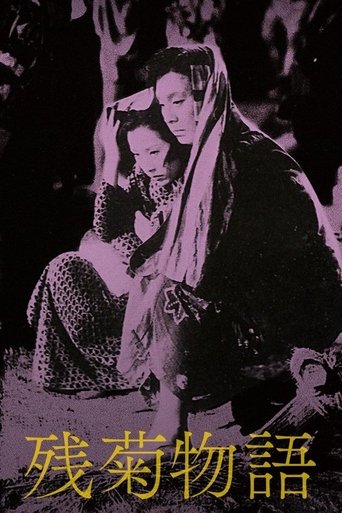
残菊物语 (1939)
残菊物語
本片内容描绘日本歌舞伎界中严酷的演艺生涯,以及女性为爱而自我牺牲的悲情故事。是沟口『一镜一景』表现形式的起点,启用的男女主角均来自舞台剧演员。女主角森赫子较长于花柳章太郎,沟口也不做掩饰,是极力以「写实」风貌呈现。本片依据当时电影法被选为优秀电影奖,也是第一届文部大臣奖作品。
演员阵容
- 花柳章太郎 — Kikunosuke Onoue
- 森赫子 — Otoku
- 高田浩吉 — Fukusuke Nakamura
- 高松锦之助 — Matsusuke Onoue
- 河原崎权十郎 — Kikugoro Onoue
- 志贺迺家辨庆 — Masseur Genshun
- 花冈菊子 — Geisha Konaka
- 伏见信子 — Geisha Eiryu
- 結城一朗 — Hotel lodger
- 六代目 嵐徳三郎 — Shikan Nakamura
- 梅村蓉子 — Osata
- Ryôtarô Kawanami — Eiju Dayu
趣闻
The Story of the Last Chrysanthemums , also titled The Story of the Last Chrysanthemum and The Story of the Late Chrysanthemums, is a 1939 Japanese drama film directed by Kenji Mizoguchi. Based on a short story by Shōfu Muramatsu, it follows an onnagata struggling for artistic mastery in late 19th century Japan.
Production
The Story of the Last Chrysanthemums was Mizoguchi's first film for the Shochiku studios after a short interlude at Shinkō Kinema. It was also the initial film of what was later regarded as a trilogy about theater during the Meiji period (the others being the lost A Woman of Osaka [Naniwa onna, 1940] and The Life of an Actor [Geidō Ichidai Otoko, 1941]).
Muramatsu's short story was based on kabuki actor Kikunosuke Onoe II (尾上 菊之助(2代目), 1868–1897).
在维基百科阅读更多 · 文本来自维基百科,CC BY-SA 4.0。数据来自 Wikidata。