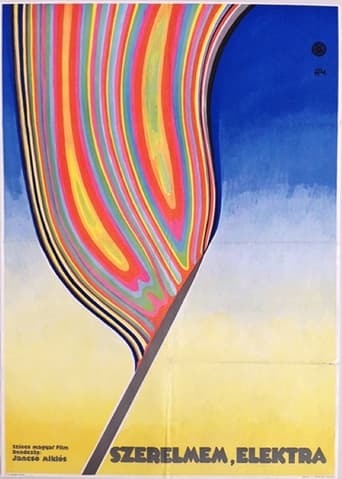
Por Electra (1974)
Szerelmem, Elektra
Reminiscente dos últimos trabalhos de Bela Tarr, "Electra, Meu Amor" de Miklós Jancsó é constituída por uma série de extremamente lentos e extremamente longos planos (há apenas oito tomas principais, cada uma com duração de uma bobine inteira de filme). Mais vídeo de música contemplativa do que filme convencional, "Electra, Meu Amor" é baseado em "Oresteia", um mito grego escrito por Ésquilo, um dramaturgo trágico antigo. O filme é protagonizado por Marie Toriocsik como Electra, uma mulher torturada que serve como uma espécie de metáfora para o povo da Hungria e seu sofrimento histórico. Ela percorre a paisagem de Jancso com uma cara melancólica, com raiva de Aegisztosz por conspirar com sua mãe para matar Agamenon, seu pai.
- Data de estreia
- 1974-12-12
- TMDB
- 6.1 / 10 (25)
- Duração
- 1 h 10 min
- Géneros
- Drama, Fantasia
- Realizador
- Miklós Jancsó
Elenco
- Törőcsik Mari — Elektra
- Cserhalmi György — Oresztész
- Madaras József — Aegisztosz
- Mária Bajcsay — Kikiáltó
- Balázsovits Lajos — Vezér
- Cseh Tamás — Dalnok
- Gabi Jobba — Krisotemis
- Jordán Tamás — Dalnok
- Pelsőczy László — Agamemnon
- Gyöngyvér Vigh
- Györgyi Lang
- Körtvélyessy Zsolt
Curiosidades
Electra, My Love is a 1974 Hungarian drama film directed by Miklós Jancsó. It was included in the official selection for the 1975 Cannes Film Festival. Like most of Jancsó's films, this one uses extremely long takes, often as long as the camera would allow without stopping because of the film stock finishing. The entire 70 minute duration is covered by just twelve takes.
Production
In the words of its director, the film is both a fairy tale and a "parable for the idea that revolutionaries must continually renew themselves". In "Electra, My Love" Jancsó said that he found himself dealing with issues that had arisen much closer to home, in Hungary "all too recently".
Restricting the film to just twelve very long "takes" affects its sequencing. The presentation is not rigidly chronological, nor, indeed, fixed by place: it could just as well be set in medieval Hungary or in ancient Greece. Co-author Gyula Hernádi described the setting as "approximately nomadic-agricultural mystical".
Filming actually took place in the Puszta grasslands, not far from Kunszentmiklós. A striking visual theme of the film is the shots of naked women, standing in rows in the background of the main action, or dancing. Each day during the filming, 500 film extras were collected from Budapest and taken by a special train and then in buses to the rural filming location.
Ler na Wikipédia · Texto da Wikipédia, CC BY-SA 4.0. Dados do Wikidata.
Recomendados
- Nine Days 2021 · ★ 6.8
- Pinocchio 2009 · ★ 6.1
- Desafio do Ano 2013 · ★ 6.8
- Girl in the Box 2016 · ★ 6.7
- Dias Sem Fim 2020 · ★ 6.3
- The Shepherd 2023 · ★ 7.0
- Game of Thrones The IMAX Experience 2015 · ★ 8.6
- Donovan's Echo 2011 · ★ 6.0
- O Número 2015 · ★ 7.3
- Aníkúlápó 2022 · ★ 7.1
- American Son 2019 · ★ 6.0
- Cavalo Dinheiro 2014 · ★ 7.2