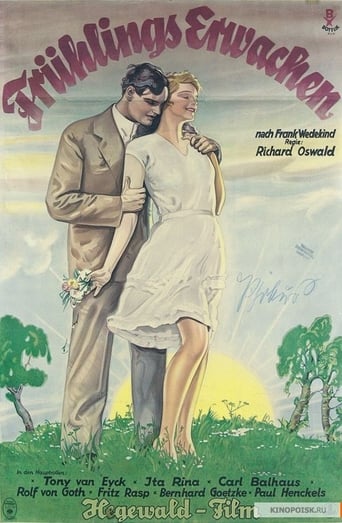
Frühlings Erwachen (1929)
Moritz Stiefel faces expulsion due to poor marks. When he is caught with an essay titled “Shame and Lust”, he is indeed kicked out – instead of classmate Melchior Gabor, who actually penned it. Gabor was drawing on his experiences with neighbourhood girl Wendla. Then Wendla turns up pregnant. Stiefel descends into despair ... Exploitation between Eros and Thanatos in this “sexual tragedy of youth” based on Frank Wedekind’s play. Setting the film in the 1920s provided a chance to explore “modern” youth culture, complete with cigarettes, jazz music, the gramophone, and a goodly bit of alcohol. Richard Oswald, a master of films of manners and young sex beginning in the 1910s, fully explores the temptations of the youthful body, even early childhood flirtatiousness. At the same time, with his target audience in mind, the film laments the bigotry and double standards of the adult world.
演员阵容
- Toni van Eyck — Wendla
- Ita Rina — Ilse
- Carl Ballhaus — Moritz
- Rolf von Goth — Melchior Gabor
- Paul Henckels — Stiefel
- Mathilde Sussin — Mrs. Bergmann
- Willy Clever — Fahrendorf
- Valy Arnheim
- Fritz Rasp
- Bernhard Goetzke
趣闻
- 改编自:春天甦醒
Spring Awakening is a 1929 German silent drama film directed by Richard Oswald and starring Mathilde Sussin, Toni van Eyck and Paul Henckels. It is an adaptation of the play of the same title by Frank Wedekind. It was shot at the Halensee Studios in Berlin.
在维基百科阅读更多 · 文本来自维基百科,CC BY-SA 4.0。数据来自 Wikidata。