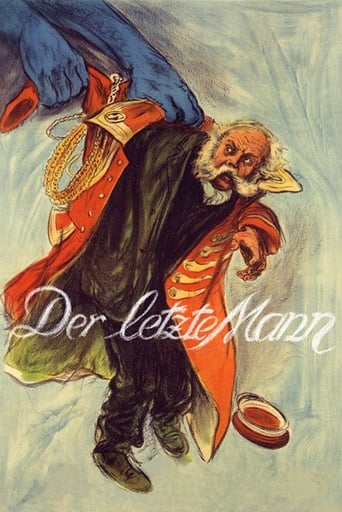
最卑贱的人 (1924)
Der letzte Mann
本片主人公(爱米尔·强宁斯 Emil Jannings 饰)是一所大旅馆的看门人,一直以来他都为这份体面的工作感到自豪。当他下班后穿着神气的制服,回到自己所居住的贫民区时,邻居们都会向他投来羡慕的眼光。新一天开始了,如常上班的他却被告知老板要辞退他,因为他年纪太大了。但念在他工作多年的份上,老板把他调去打扫厕所,还要收 回他的金边制服。他一下子从神气十足的看门人变成了低三下四的厕所清洁工。不能接受这个事实的他,夜里潜入旅馆把制服偷了回来。他穿着制服去参加侄女的婚礼,没有把被调职一事告诉亲朋好友。很快,他的秘密被别人知道了,大家纷纷嘲笑他。他再也没有颜面去面对别人了,于是跑回旅馆归还了制服,失魂落魄地坐在厕所中。然而故事并没有就此结束……
演员阵容
- Emil Jannings — Hotel Doorman
- Maly Delschaft — His Niece
- Max Hiller — Bridegroom
- Hans Unterkircher — Hotel Manager
- Hermann Vallentin — Potbellied Guest
- Emilie Kurz — Bridegroom's Aunt
- Georg John — Night Watchman
- Emmy Wyda — Thin Neighbor
- Harald Madsen — uncredited
- Carl Schenstrøm — Wedding Musician
- Olaf Storm — Young Guest
- O.E. Hasse — uncredited
趣闻
The Last Laugh is a 1924 German silent film directed by German director F. W. Murnau from a screenplay written by Carl Mayer. The film stars Emil Jannings and Maly Delschaft.
Production
Director F. W. Murnau was at the height of his film career in Germany and had high ambitions for his first film with UFA. He stated that "All our efforts must be directed towards abstracting everything that isn't the true domain of the cinema.
The film was shot entirely at the UFA Studios. Murnau and cinematographer Karl Freund used elaborate camera movements for the film, a technique later called "entfesselte Kamera" (unchained camera). In one scene a camera was strapped to Freund's chest as he rode a bicycle into an elevator and onto the street below. In another scene a camera is sent down a wire from a window to the street below, and later reversed in editing.
Murnau noted that the story was absurd on the grounds that "everyone knows that a washroom attendant makes more than a doorman." The signs in the film are written in an imaginary language that Alfred Hitchcock took as Esperanto.
There were three different versions of the film, for German, American and international audiences. While European markets retained the meaning of the original German title (The Last Man) on its initial release, the English-speaking countries opted for the more optimistic Laugh title.
在维基百科阅读更多 · 文本来自维基百科,CC BY-SA 4.0。数据来自 Wikidata。