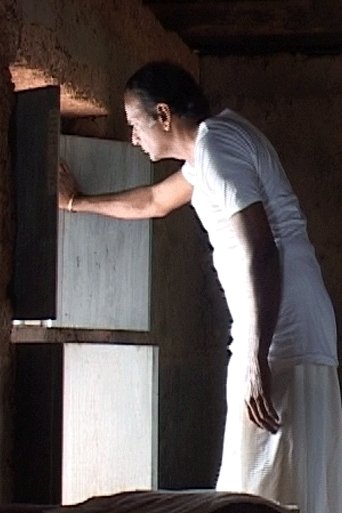
The Cleansing Rites (2005)
Suddha
An erstwhile feudal family struggles hard to perform the last right of a family member in the grand scale that it is supposed to do.
Suddha depicts the death of the feudal system that existed among the Tulu speaking community in coastal Karnataka for many years, and the impact of The Land Ceiling Act, which was ushered in during the sixties and seventies, on its social structure. It is the story of modern India - of changing caste equations and a realisation of this reality among the land owning class, albeit a bit late. Though the film is set in a remote village near Mangalore, it could well have happened in any other village elsewhere in India. An ex-landlord family comes to terms with the fact that they are living in their last leg of feudal existence when it cannot perform a last rites in a grand manner in which it was once used to.
- Date of release
- 2005-01-01
- Runtime
- 1h 45m
- Director
- Ramchandra P.N.
Casting
- Sharada Devi — Radha
- Bharathi Jain — Jaaji
- Jagatpal Jain — Booba
- Saikrishna Kudla — Ravi
- Aasha Marnad — Shobha
- Gopal Marnad — Gopal
- Mohandas — Guruva
- Sujata Mudradi — Rashmi
- Subhash Padiwaal — Guttinaar
- Boja Shetty — Ramanna
Interesting facts
Suddha, also called The Cleansing Rites, is an Indian film, the first-ever Tulu language film shot in the digital format. The 105-minute film was shot in 2004 in a village called Marnad near Mangalore, Karnataka, and was released in 2005. The film is an adaptation of the Tulu Sahitya Academy award-winning Tulu play called Bojja written by Mumbai-based playwright, Narayana Nandalike. Suddha was produced by three Mumbai Tuluvas Mohan Marnad, Surendra Kumar and Ramchandra PN. It was directed by Ramchandra PN, a graduate of the Film and Television Institute of India, Poona. Suddha was his first feature-length film.
Production
The uniqueness of this film is that it uses available lights and natural sounds. The sound tack or the sound design of this film as a text is something new to Tulu cinema. There is no background music in the film, carefully places sound effects themselves give the effect that music gives.
"The film uses the chirping of birds, flowing water and folklore-like songs extensively as its outdoor sound and ticking sound of clock for the indoor sound. The ticking sound of clock and a frequent presence of radio songs, successfully create a calm village house environment.
Read on Wikipedia · Text from Wikipedia, CC BY-SA 4.0. Data from Wikidata.
Recommended
- The Magic of Ordinary Days 2005 · ★ 7.5
- An Autumn Romance 2021 · ★ 7.1
- Broke 2025 · ★ 7.0
- Not Easily Broken 2009 · ★ 6.3
- Winter Castle 2019 · ★ 6.8
- Fedora 1978 · ★ 6.7
- A Royal Runaway Romance 2022 · ★ 7.3
- Lady Chatterley's Lover 2022 · ★ 6.7
- Trishna 2011 · ★ 6.0
- Love, Once and Always 2018 · ★ 6.3
- Love on the Slopes 2018 · ★ 6.4
- Game Change 2012 · ★ 6.9