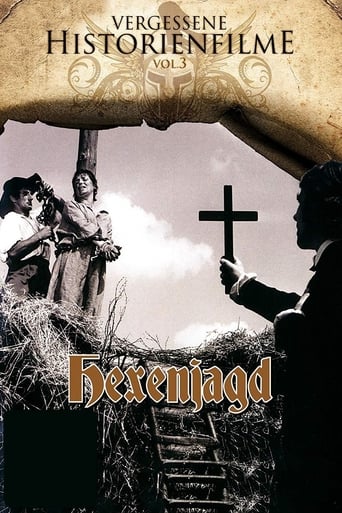
Die Hexenjagd (1970)
Kladivo na čarodějnice
Mähren, Ende 17. Jahrhundert: Als in der katholischen und von Hexenvorfällen bisher verschont gebliebenen Gemeinde um Groß Ullersdorf eine abergläubische alte Bettlerin während eines Gottesdienstes des Hostienfrevels überführt wird, wittert der naive und übereifrige Dorfpfarrer Eusebius Schmidt Hexerei und ersucht die Gräfin von Galle um die Finanzierung eines Hexentribunals. Die Grafin, verängstigt und besorgt um die weiße Weste ihres Hoheitsgebietes, willigt ein und reaktiviert daraufhin den berüchtigten, mehr auf den Hexenhammer als auf die Bibel schwörenden und mittlerweile pensionierten Inquisitor Franz Boblig von Edelstadt damit dieser die aufkommende, vermeintliche Hexenbrut im Keim ersticken möge.
- Erscheinungsdatum
- 1970-01-23
- TMDB
- 7.5 / 10 (81)
- Laufzeit
- 1 Std. 43 Min.
- Genres
- Drama, Thriller
- Regie
- Otakar Vávra
Besetzung
- Elo Romančík — Lautner
- Vladimír Šmeral — Boblig
- Soňa Valentová — Zuzana
- Josef Kemr — Ignác
- Lola Skrbková — Maryna
- Jiřina Štěpničková — Dorota Groerová
- Marie Nademlejnská — Davidka
- Miriam Kantorková — Tobiásová
- Lubor Tokoš — Sattler
- Blažena Holišová — Sattlerová
- Jaroslava Obermaierová — Líza
- Jiří Holý — farár König
Wissenswertes
Witchhammer is a 1970 Czechoslovak drama film directed by Otakar Vávra and starring Elo Romančík. Based on the novel Kladivo na čarodějnice by Václav Kaplický, Witchhammer relates the story of the Northern Moravia witch trials of the 1670s, focusing on the priest Kryštof Lautner, played by Romančík, who falls victim to the witchhunt after opposing the trials. The film contains possible allegory about Communist show trials in Czechoslovakia.
Production
Director Otakar Vávra made the film in 1969. In crafting the screenplay with Ester Krumbachová, Vávra drew from Kaplický's novel and also records from the historical trials in Šumperk. Vávra was reminded of trials he had seen in the 1950s, stating that "In historical records I came upon sensible, hard-working people who fell quite unexpectedly into the clutches of the revived medieval witch trial machine".
The film was produced by Barrandov Studios. Cinematographer Josef Illík shot the film in CinemaScope. Krumbachová is also credited with writing the "soldiers' song" used in the film.
Sona Valentová revealed that the props used in the inquisition scene, including the instruments of torture, which were from the museum, had to be authentic.
Auf Wikipedia weiterlesen · Text aus Wikipedia, CC BY-SA 4.0. Daten aus Wikidata.
Empfohlen
- The Sisterhood of Night 2015 · ★ 6.2
- Hexenjagd 1996 · ★ 6.6
- Das Schweigen der Lämmer 1991 · ★ 8.3
- Sleepers 1996 · ★ 7.6
- Zwielicht 1996 · ★ 7.7
- Cracks 2009 · ★ 6.6
- Is God Is 2026 · ★ 5.9
- Das Haus in der Carroll Street 1988 · ★ 6.0
- Flucht aus Sobibor 1987 · ★ 7.2
- Raum 2015 · ★ 8.0
- Linda's Child 2013 · ★ 6.0
- Das Biest 1993 · ★ 6.7