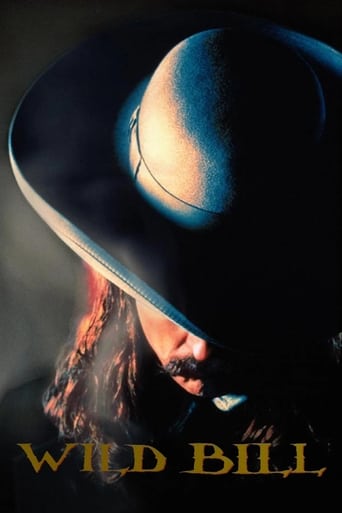
西域枪神 (1995)
Wild Bill
故事聚焦于美国西部传奇枪手“蛮牛”比尔·希科克(杰夫·布里吉斯饰)生命中最后的灰暗时光,讲述了这位曾经威震西部的传奇警长在步入晚年后面临视力衰退的绝境,不得不隐居在无法无天的南达科他州死木镇(Deadwood),整日沉溺于鸦片的迷幻世界与对自己过往无数次血腥杀戮的痛苦回忆中;在这里,他与性格同样刚烈的昔日情人“灾星简”再度重逢,却不知一个名叫杰克·麦考尔的狂妄青年因坚信比尔当年侮辱并毁了自己的母亲,正怀揣着满腔仇恨潜伏在小镇的阴暗角落,步步逼近并在酒馆的牌桌前,为这位传奇枪手拉开了宿命般的死亡序幕。
演员阵容
- 杰夫·布里吉斯 — Wild Bill Hickok
- 艾伦·巴金 — Calamity Jane
- 约翰·赫特 — Charley Prince
- 戴安·琳恩 — Susannah Moore
- 基思·拉丁 — Buffalo Bill Cody
- 大卫·阿奎特 — Jack McCall
- 克里斯蒂娜·阿普尔盖特 — Lurline
- 布鲁斯·邓恩 — Will Plummer
- 詹姆斯·甘蒙 — California Joe
- Marjoe Gortner — Preacher
- 詹姆斯·瑞马尔 — Donnie Lonigan
- 凯伦·惠伊 — Song Lew
趣闻
- 预算:US$3000万
Wild Bill is a 1995 American biographical Western film about the last days of legendary lawman Wild Bill Hickok. The film was written and directed by Walter Hill, and based on the 1978 stage play Fathers and Sons by Thomas Babe and the 1986 novel Deadwood by Pete Dexter. It stars Jeff Bridges, Ellen Barkin, John Hurt, and Diane Lane, and was released by United Artists on December 1, 1995. It was a box-office bomb, grossing $2.1 million on a budget of $30 million, and received mixed reviews from critics.
Production
The script was based on several sources. One of them was the play Fathers and Sons which had been on Broadway in 1978, directed by Joseph Papp. It was written by Thomas Babe, and focused on Hickok's last days in Deadwood, placing the action in the saloon where he was killed. Babe says he entirely made up the nature of Jack McCall, whom he turned into Hickok's illegitimate son.
Meanwhile, the team of Richard and Lili Zanuck had optioned a 1986 novel about Hickok called Deadwood. They had hired the author, Pete Dexter, to write the script for the movie Rush. The Zanucks said they were interested in the project because it explored the nature of celebrity in a Western context. "Figures like Wild Bill were like rock stars," said Lili Zanuck.
"He's a gutsy director," Zanuck said about Hill. "He's kind of a male-oriented director, and he has great knowledge of the West and all of the folklore and all of the heroes."
Hill wrote a script based on the play, the novel, and Ned Wynn's screenplay. Hill says he took details of the town from the novel but the relationship between McCall and Hickok was mostly from the play. Hill took material from Dexter's novel for the atmosphere of the town and relied on Babe's play heavily for the third act, the last hours of Hickok.
Hill said the script was based on "character rather than incident. Because I think it's not so much the fights, it's his personality, his sense of humor about himself. He seemed to understand his own legend. He both fueled it and was a prisoner of it, that it was his raison d'etre, and at the same time he felt himself very constrained by it."
在维基百科阅读更多 · 文本来自维基百科,CC BY-SA 4.0。数据来自 Wikidata。