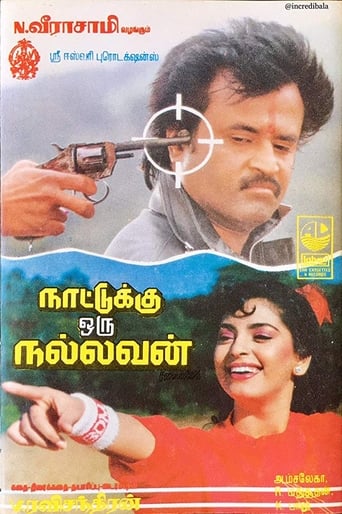
Shanti Kranti (1991)
ಶಾಂತಿ ಕ್ರಾಂತಿ
An honest police officer investigates an organ trafficking racket. He soon discovers that it is operated by Daddy, a criminal, under the guise of an orphanage.
- Date of release
- 1991-09-19
- TMDB
- 8.0 / 10 (2)
- Runtime
- 2h 25m
- Genres
- Action, Thriller, Crime, Drama
- Director
- V. Ravichandran
Casting
- V. Ravichandran — Inspector Subhash (Kannada Version) / Inspector Bharath (Telugu, Tamil & Hindi Version)
- Nagarjuna Akkineni — Inspector Subhash (Telugu Version)
- Rajinikanth — Inspector Subhash (Tamil & Hindi Version)
- Juhi Chawla Mehta — Jyothi
- Ramesh Aravind — Inspector Bharath (Kannada Version)
- Anant Nag — Daddy
- Khusbhu Sundar — Rekha
- Srinath — Commissioner of Police (Kannada & Telugu Version)
- Jaishankar — Commissioner of Police (Tamil Version)
- Alok Nath — Commissioner of Police (Hindi Version)
- Doddanna — Subhash's Father (Kannada Version)
- Kaikala Satyanarayana — Subhash's Father (Telugu Version)
Interesting facts
Shanti Kranti is a 1991 Indian action crime film written, directed and produced by V. Ravichandran. The film was simultaneously made in Kannada, Telugu, Hindi and Tamil languages, with the Tamil version titled Nattukku Oru Nallavan.
Production
Shanti Kranti was announced by V. Ravichandran as one of the most expensive projects of his career. He decided to direct the film in four languages—Kannada, Telugu, Tamil, and Hindi. The Tamil version was titled Naattukku Oru Nallavan. Rajinikanth was cast in the lead role for the Tamil and Hindi versions, while Nagarjuna was chosen for the Telugu version, and Ravichandran himself played the lead in the Kannada version.
The film was launched on 14 November 1988, coinciding with the birth anniversary of Jawaharlal Nehru, at Kanteerava Studios. The launch event was attended by journalists from various languages, who were shown Ravichandran's previous films Premaloka (1987) and Ranadheera (1988) before engaging in discussions with the director.
The film faced several production challenges. During the early stages of shooting, Ravichandran became concerned about the direction of the film. After 10 days of shooting, he felt that the story was not progressing as expected and doubted whether the project would succeed. Despite these reservations, Ravichandran continued with the film, motivated by the encouragement of his father, Veeraswamy, who was producing the film.
The production process was further complicated by challenges such as securing call sheets from the stars and coordinating their schedules. Filming took place at a time when digital cameras were not available, so the production relied entirely on film reels, which limited the number of takes and required careful planning. Additionally, a strike in the Kannada film industry disrupted the production, making it even more difficult.
To realise his vision for the film, Ravichandran took the unconventional step of borrowing a 50-acre plot of empty land to shoot the climax. In addition, large sets were constructed to recreate M. G. Road in Bangalore, with special effects involving explosions and separate teams assigned to cater to the needs of each language version. Multiple cars, catering services, and crew members were organised for the different versions of the film.
Read on Wikipedia · Text from Wikipedia, CC BY-SA 4.0. Data from Wikidata.
Recommended
- Oscar Shaw 2026 · ★ 6.6
- Each Dawn I Die 1939 · ★ 6.9
- Indemnity 2022 · ★ 6.6
- The Blue Lamp 1950 · ★ 6.6
- The Quiller Memorandum 1966 · ★ 5.9
- Time Without Pity 1957 · ★ 6.5
- The Interview 1998 · ★ 6.8
- Pushover 1954 · ★ 6.6
- The Unholy Three 1925 · ★ 6.7
- The Street with No Name 1948 · ★ 6.4
- The Racket 1951 · ★ 6.3
- Plunder Road 1957 · ★ 6.9