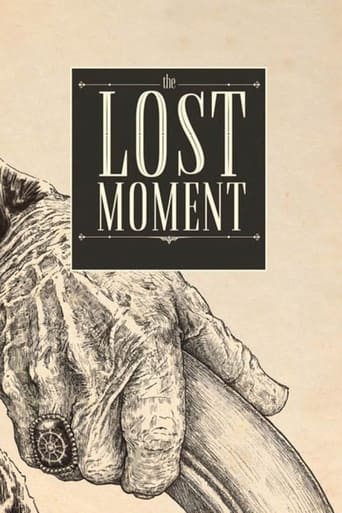
Viviendo el pasado (1947)
The Lost Moment
El editor Lewis Venable, un hombre enamorado de su profesión, va a Venecia con la esperanza de que Juliana Bordeau ponga a su disposición las cartas de amor que, a mediados del siglo XIX, le escribió el poeta Jeffrey Ashton. Para conseguir su propósito se presenta en casa de la dama haciéndose pasar por escritor. (FILMAFFINITY)
- Fecha de estreno
- 1947-11-21
- TMDB
- 6.3 / 10 (26)
- Duración
- 1 h 29 min
- Géneros
- Drama, Suspense, Romance
- Director
- Martin Gabel
Reparto
- Robert Cummings — Lewis Venable
- Susan Hayward — Tina Bordereau
- Agnes Moorehead — Juliana Borderau
- Joan Lorring — Amelia
- Eduardo Ciannelli — Father Rinaldo
- John Archer — Charles Russell
- Frank Puglia — Pietro
- Minerva Urecal — Maria
- William Edmunds — Vittorio
Curiosidades
The Lost Moment is a 1947 American Gothic psychological thriller film directed by Martin Gabel and starring Robert Cummings, Susan Hayward and Agnes Moorehead.
Production
The film was produced at Universal Pictures by Walter Wanger, from a screenplay by Leonardo Bercovici based on the 1888 novella The Aspern Papers by Henry James. Bercovici wrote the script in 1946 for Charles Feldman who developed several projects for the property. Wanger bought the script in January 1947 for a reported $200,000. (In fact no money changed hands - Wanger bought the script in exchange for a scenario called The Washington Flyer.)
The script was called The Lost Love. Wanger said the script would be directed by Martin Gabel, who had just worked as producer on Smash-Up, the Story of a Woman for Wanger; that film starred Susan Hayward who would be in the new movie as well.
Wanger said the character of James Aspern was a combination of Shelley, Keats and Byron. He would change the name of Aspern to Ashton to avoid "exploitation of the Bayer product."
In late February, Robert Cummings signed to make the film, which was then called The Lost Love. (He was scheduled to do The Big Curtain for Edward Alperson afterwards.) Filming began March 10, 1947.
The set was not a tranquil one, with Hayward and Gabel quarreling over his interruptions of her line readings. After warning her director to stop, she reportedly picked up a lamp and threw it at him. Gabel never directed another motion picture.
Leer en Wikipedia · Texto de Wikipedia, CC BY-SA 4.0. Datos de Wikidata.
Recomendadas
- Persuasión 2007 · ★ 7.2
- Juegos de seducción 2025 · ★ 7.8
- Encuentra el amor en Valentine 2016 · ★ 6.4
- Supercross 2005 · ★ 6.3
- Amor en San Valentín 2020 · ★ 7.0
- Departure 2016 · ★ 6.3
- La copa dorada 2000 · ★ 6.0
- El secreto: Atrévete a soñar 2020 · ★ 7.4
- Amor que mata 1947 · ★ 6.9
- Un extraño en mi vida 1960 · ★ 6.4
- Mil ramos de rosas 1996 · ★ 5.9
- Una vida nueva 2020 · ★ 6.6