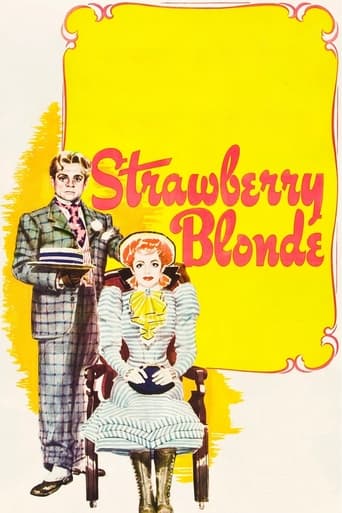
Клубничная блондинка (1941)
The Strawberry Blonde
Когда-то Бифф Граймс работал в строительной фирме, но из-за недобросовестности своего делового партнера Хьюго Барнстеда, Граймс угодил в тюрьму, где провел пять лет. За эти годы Хьюго увел подружку Биффа, и Граймс, когда вышел на свободу, нашел себе и другую девушку, и другую работу: Бифф стал дантистом. И вот, однажды, в его кабинете раздался телефонный звонок: высокопоставленный чиновник нуждался в срочном вмешательстве зубного врача. Звали чиновника Хьюго Барнстед. Бифф Граймс понял, что судьба посылает ему замечательный случай расквитаться за все обиды…
- Дата выхода
- 1941-02-21
- TMDB
- 6.9 / 10 (73)
- Длительность
- 1 ч 37 мин
- Жанры
- мелодрама, комедия
- Режиссёр
- Raoul Walsh
В ролях
- Джеймс Кэгни — Biff Grimes
- Оливия де Хэвилленд — Amy Lind
- Рита Хэйворт — Virginia Brush
- Алан Хейл — Old Man Grimes
- Джек Карсон — Hugo Barnstead
- Джордж Тобиаш — Nicholas Pappalas
- Уна О’Коннор — Mrs. Mulcahey
- Джордж Ривз — Harold
- Lucile Fairbanks — Harold's Girl Friend
- Edward McNamara — Big Joe
- Хелен Линд — Josephine
- Herbert Heywood — Toby
Интересные факты
- Наград: 0 · Номинаций: 1
The Strawberry Blonde is a 1941 American romantic comedy drama film directed by Raoul Walsh, starring James Cagney and Olivia de Havilland, and featuring Rita Hayworth, Alan Hale, Jack Carson, and George Tobias. Set in 1890s New York City, it features songs of that era such as "The Band Played On", "Bill Bailey", "Meet Me in St. Louis, Louie", "Wait Till The Sun Shines Nellie", and "Love Me and the World Is Mine". It was nominated for an Academy Award in 1941 for Best Scoring of a Musical Picture.
Development and production
Both the director of Strawberry Blonde, Raoul Walsh, and its star James Cagney came to the project looking for a change of pace. Walsh had just completed the dark Humphrey Bogart/Ida Lupino vehicle High Sierra, shot largely on location, and the good notices the film received had Walsh "as fired up as Jack Warner to keep the ball rolling on projects in development and production." The transition between the outdoorsy film noir and the light and se…
Cagney usually played tough guys at Warner Bros. Pictures in the early 1930s, but he had shown his talents at lighter, musical material in films like Footlight Parade (1933) He left the studio in mid-decade, then returned in 1938 with a contract that gave him more control in choosing roles and brought his younger brother William Cagney as assistant producer and informal buffer between himself and studio executives.
A property on the lot that might fill that bill was One Sunday Afternoon. It had started early in 1933 as a successful Broadway play by James Hagan and had been adapted later that year by Paramount as a vehicle for Gary Cooper. It was "the only real flop of Cooper's stellar and carefully orchestrated career"—and the only Cooper picture ever to lose money.
Wallis knew the trick was to tailor the script as a vehicle for Cagney, who had yet to commit either to the project or even to his brother. Wallis had a first draft of a screenplay done by Stephen Morehouse Avery that satisfied no one; he called in the Epstein brothers, Julius and Phillip, for another vision—one that might hook Cagney into the project.
Cagney still was reluctant. Wallis was getting impatient; he considered the emerging John Garfield for the role of Biff Grimes. By July 1940, concern about the impasse stretched all the way to New York, where Harry Warner cabled brother Jack that he was willing to give Cagney 10% of the gross, and then Cagney began to budge.
Читать в Википедии · Текст из Википедии, CC BY-SA 4.0. Данные Викиданных.
Рекомендуем
- При чём тут любовь? 2023 · ★ 6.1
- Выкрутасы 2011 · ★ 5.9
- Сдохни, Джон Такер! 2006 · ★ 6.1
- Принц и я 4 2010 · ★ 6.1
- Влюбиться в воздухе 2023 · ★ 6.2
- Whisky Galore 2016 · ★ 5.9
- You're Never Too Young 1955 · ★ 6.6
- Друг невесты 2008 · ★ 6.5
- Лёгкое поведение 2008 · ★ 6.5
- Бакстер 2005 · ★ 6.0
- Насмотревшись детективов 2007 · ★ 6.3
- Хватай деньги и беги 1969 · ★ 7.1