북경의 별 (2021)
北京之春
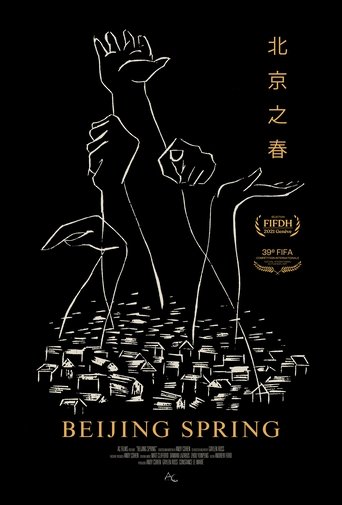
경찰이 싱싱화후(星星畫會)의 도발적인 예술 공연을 중단시키고 활동가 웨이징성을 체포하자 수천 명이 천안문 광장에서 표현의 자유를 요구하며 시위를 벌였다. 이는 공산주의 통치 하에서 처음으로 일어난 시위였다. 영화감독 치샤오닝은 이 사건을 비밀리에 기록했고, 수년간 숨겨져 있던 그의 영상이 이제 공개된다.
- 개봉일
- 2021-03-05
- TMDB
- 7.7 / 10 (3)
- 상영 시간(분)
- 1시간 42분
- 장르
- 다큐멘터리, 역사
- 감독
- Andy Cohen, Gaylen Ross
흥미로운 사실
Beijing Spring is a 2021 American documentary film directed by Andy Cohen and co-directed by Gaylen Ross. The film chronicles the struggle for free speech and free artistic expression in the People's Republic of China (PRC) during a brief period of political reform during the late 1970s known as the Beijing Spring. Production started in 2010 and finished in 2020. Due to legal and jurisdictional issues surrounding the rights of Chi Xiaoning's never-before-seen archival footage, production was halted for four years until Hong Kong's M+ Museum untangled complicated ownership rights.
Background
The Beijing Spring began with Mao Zedong's death in September 1976 and peaked with Deng Xiaoping's liberalization efforts in 1978-1979. Along with economic reforms, Deng loosened censorship, allowing western books and ideas into China, and experimented with free speech, allowing citizens to express their thoughts freely in one easily monitored locale: the Democracy Wall, a long brick wall running along Xidan Street near Tiananmen Square.
The film focuses on a group of artists called the Stars, which grew out of the underground magazine Today. At Democracy Wall, the artists pushed the limits of free speech by posting prohibited art forms such as abstraction and nudity, photos and poetry depicting everyday life, as well as sculpture critical of the CCP.
After being refused the right to officially exhibit their avant-garde work in a gallery, the Stars held an illegal exhibition on the fence outside the National Museum of China. It was immediately taken down by the police and the works confiscated.
Provoked and incensed, Deng cracked down on the Democracy Wall movement and Stars art group in 1980, closing the wall and issuing arrests, putting an end to the Beijing Spring. The government-sponsored Anti-Spiritual Pollution campaign that followed sought to curtail Western-inspired liberal ideas from "polluting" China's youth and culture.
For the first time ever, Beijing Spring shows 16-mm footage of the illegal 1979 Stars art exhibit hung on the iron fence of the National Museum, as well as modern China's first protest rally and march through the city streets. After being detained by the authorities for illegally filming the illegal protest, Chi Xiaoning tricked the authorities into believing he destroyed the footage by exposing a blank reel of film.
위키백과에서 더 읽기 · 텍스트 출처: 위키백과, CC BY-SA 4.0. 데이터 출처: Wikidata.
추천
- 메이킹 웨이브: 영화 사운드의 예술 2019 · ★ 6.9
- 데이빗 보위: 지기 스타더스트 마지막 날들 2017 · ★ 7.1
- 휘트니 2018 · ★ 7.3
- 오드리 2020 · ★ 7.1
- 웨스턴 스타스 2019 · ★ 7.0
- 베티 페이지 리빌스 올 2013 · ★ 6.8
- '9/11: 백악관 상황실, 그 안에선 무슨 일이 있었나' - 9/11: Inside the President's War Room 2021 · ★ 6.9
- Frank and Ollie 1995 · ★ 7.4
- 자본주의: 러브 스토리 2009 · ★ 7.1
- 왬! 2023 · ★ 7.3
- 뉴욕 광시곡 1996 · ★ 6.8
- 슈퍼소닉 2016 · ★ 7.4