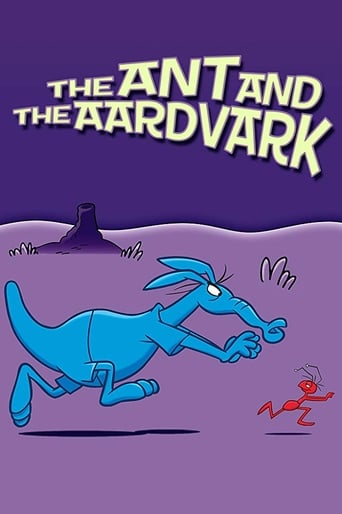
The Ant and the Aardvark (1969)
An aardvark tries to catch one ant without success.
- Date of release
- 1969-03-05
- TMDB
- 7.1 / 10 (22)
- Runtime
- 6m
- Genres
- Animation, Comedy, Family
- Director
- Friz Freleng
Casting
- John Byner — Ant / Aardvark (voice)
Interesting facts
The Ant and the Aardvark is a series of 17 theatrical short cartoons produced at DePatie–Freleng Enterprises and released by United Artists from 1969 to 1971.
Production
The Ant and the Aardvark series was originally released by United Artists. Seventeen theatrical shorts were produced in the original series, and were subsequently featured in various television syndication packages, usually shown with DFE's other characters such as the Pink Panther and The Inspector.
When The Ant and the Aardvark first appeared on The New Pink Panther Show in the fall of 1971, the series became wildly popular, so much in fact that the duo became a featured part of the NBC series. Even though the 17 entries remained popular throughout the broadcast run of The Pink Panther Show, no new entries were produced.
The series used several unique production techniques for the period. The aardvark's body was solid blue: his only clothes—a pair of blue shorts and matching T-shirt—were a matching blue. Similarly, Charlie Ant was solid red, and did not sport any clothing. As such, the character's solid colors allowed them to stand out clearly against the multi-colored backgrounds featured prominently in the series.
Musical director Doug Goodwin was responsible for the jazzy music score. Goodwin assembled an established group of jazz session musicians to perform the series' theme music and musical cues. For the first time in animated cartoons, all six musicians—Ray Brown, Billy Byers, Pete Candoli, Shelly Manne, Jimmy Rowles and Tommy Tedesco—received on-screen credit.
Art Leonardi was responsible for the main title graphic for all DePatie-Freleng entries. For The Ant and the Aardvark series, Leonardi expanded on a technique first introduced for the first Pink Panther cartoon, The Pink Phink. This entailed tearing paper into the forms of objects and characters to form stylized images.
Read on Wikipedia · Text from Wikipedia, CC BY-SA 4.0. Data from Wikidata.
Recommended
- Happiness Is a Warm Blanket, Charlie Brown 2011 · ★ 7.1
- The Wonderful World of Mickey Mouse: Steamboat Silly 2023 · ★ 6.9
- Two by Two: Overboard! 2020 · ★ 7.6
- Forky Asks a Question: What Is Cheese? 2020 · ★ 6.3
- Ferdinand the Bull 1938 · ★ 6.7
- Burrow 2020 · ★ 7.4
- The Looney, Looney, Looney Bugs Bunny Movie 1981 · ★ 7.3
- Extinct 2021 · ★ 6.2
- The Grasshopper and the Ants 1934 · ★ 6.4
- Duck Duck Goose 2018 · ★ 6.2
- Woody Woodpecker 2017 · ★ 6.6
- Hammy's Boomerang Adventure 2006 · ★ 6.1