Manhatta (1921)
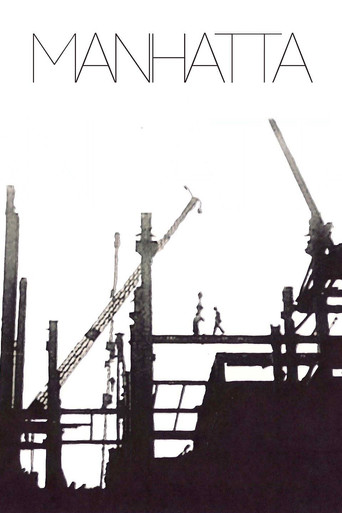
Morning reveals New York harbor, the wharves, the Brooklyn Bridge. A ferry boat docks, disgorging its huddled mass. People move briskly along Wall St. or stroll more languorously through a cemetery. Ranks of skyscrapers extrude columns of smoke and steam. In plain view. Or framed, as through a balustrade. A crane promotes the city's upward progress, as an ironworker balances on a high beam. A locomotive in a railway yard prepares to depart, while an arriving ocean liner jostles with attentive tugboats. Fading sunlight is reflected in the waters of the harbor. The imagery is interspersed with quotations from Walt Whitman, who is left unnamed.
- Date of release
- 1921-01-01
- TMDB
- 6.6 / 10 (81)
- Runtime
- 11m
- Genres
- Documentary
- Director
- Paul Strand, Charles Sheeler
Interesting facts
Manhatta (1921) is a short documentary film directed by painter Charles Sheeler and photographer Paul Strand.
Production background
Manhatta documents the early 20th-century look of Manhattan. With the city as subject, the film consists of 65 shots sequenced in a loose non-narrative structure, beginning with the Staten Island ferry approaching Manhattan and concludes with a sunset view from a skyscraper. Often considered by some to be the first American avant-garde film, its primary objective is to explore the relationship between photography and film.
Manhatta was a collaboration between painter/photographer Charles Sheeler and photographer Paul Strand. The film features intertitles that include excerpts from the writings of Walt Whitman.
Read on Wikipedia · Text from Wikipedia, CC BY-SA 4.0. Data from Wikidata.
Recommended
- Salinger 2013 · ★ 6.4
- Woody Allen: A Documentary 2011 · ★ 6.9
- Naqoyqatsi 2002 · ★ 6.2
- Being James Bond 2021 · ★ 7.8
- Daybreak Express 1957 · ★ 7.2
- Aquaman: Heroines of Atlantis 2019 · ★ 6.2
- Billie Eilish - Hit Me Hard and Soft: The Tour (Live in 3D) 2026 · ★ 8.4
- Come See Me in the Good Light 2025 · ★ 7.1
- Anna Nicole Smith: You Don't Know Me 2023 · ★ 6.1
- De Palma 2016 · ★ 7.0
- Love, Antosha 2019 · ★ 7.4
- My Mom Jayne 2025 · ★ 7.9