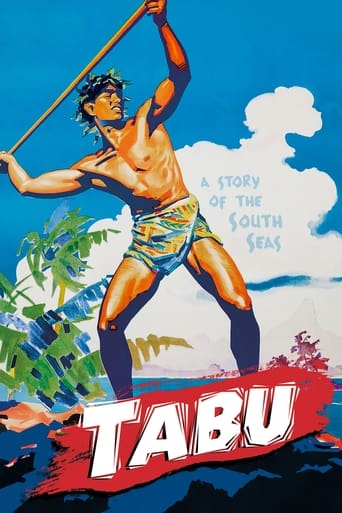
禁忌 (1931)
Tabu: A Story of the South Seas
作为纪录电影大师弗拉哈迪的“毛利族三部曲”的最后一部(此前两部为《摩阿拿》和《南海白影》),影片讴歌了生死不渝的爱情,真实生动地反映了毛利人反对迷信和等级制度的斗争,有着鲜明的记录化风格,受到热烈欢迎。弗拉哈迪原著的本意是要拍一部表现毛利人社会生活的记录片,而茂瑙的不断修改则为其注入了更多的情节因素,招致弗拉哈迪的反对。在意见不合的情况下弗拉哈迪离开了摄制组,茂瑙不得不独立完成余下的工作。后来,弗拉哈迪也承认,在这部影片里,茂瑙有着更多的贡献。《禁忌》获第4届奥斯卡最佳摄影金像奖。 影片描写在南海上有个小岛,上面住着毛利人原始部落过着无忧无虑生活,部族依照当地信仰需要选举一位少女作为神供养(她将不能结婚),少女不愿过这种日子于是和未婚夫逃离了小岛,到了另一个岛生活,生活虽然艰难当时他们一直相亲相爱,直到部族首领(巫师)寻迹而至,少女不得不离开,他的未婚夫疯狂泅水去追赶那只载走他的未婚妻的船,他抓住了那艘船的缆绳,可是船上的巫师却把绳子割断,巨浪滔天,青年为了爱情悲壮地葬身于大海。
演员阵容
- Matahi — The Boy
- Anne Chevalier — The Girl (as Reri)
- Bill Bambridge — The Policeman (as Jean)
- Hitu — The Old Warrior
- Jules — The Captain (uncredited)
趣闻
- 票房:US$47.2万
- 预算:US$15万
- 票房达到预算的 3.1 倍
- 拍摄地:塔希提岛
- 获奖:2 · 提名:1. 包括:奧斯卡最佳攝影獎; 國家評論協會獎:十大佳片
Tabu: A Story of the South Seas is a 1931 American synchronized sound film directed by F. W. Murnau. While the film has no audible dialog, it was released with a synchronized musical score with sound effects using the Western Electric Sound System sound-on-film process. A docufiction, it is split into two chapters: The first, called "Paradise", depicts the lives of two lovers on a South Seas island until they are forced to escape the island when the girl is chosen as a holy maid to the gods. The second chapter, "Paradise Lost", depicts the couple's life on a colonised island and how they adapt to and are exploited by Western civilisation.
Production
Murnau was coming off two troubled Fox Studios productions, Four Devils (1928) and City Girl (1930), while Flaherty's Native American documentary Acoma the Sky City had been shut down. The two directors knew each other through Flaherty's brother David, and Murnau expressed a desire to make a film in Tahiti with Flaherty who had experience with the natives there.
Murnau visited Tahiti in May 1929 and was joined by Flaherty a month later to scout for locations on the nearby island of Bora Bora. While scouting, they found their leading lady, Anne Chevalier, in a local cocktail bar.
The production was originally supposed to be financed by a small production company called Colorart. By September, however, Murnau had only received $5,000 of the due money. After a series of telegrams asking for the rest of the money, Murnau got fed up and decided to fund it himself.
To cut costs, Murnau sent the Hollywood crew home and trained the natives to work as the crew. He also scrapped plans to shoot the film in colour and changed to black and white. The film's script was rewritten and the title was changed to Tabu: A Story of the South Seas to avoid potential legal issues with Colorart. This was the start of a poor working relationship between Flaherty and Murnau.
Production began in January 1930, with Flaherty directing the opening scene of the film. This would be the only scene he directed. Flaherty began having technical problems, as his camera was causing the film to rip. He called in cinematographer Floyd Crosby for help and the rest of the film was shot by Crosby.
在维基百科阅读更多 · 文本来自维基百科,CC BY-SA 4.0。数据来自 Wikidata。